

Is your apartment too small for a rescue cat? Is your family home too busy? Do you need a dedicated cat room before you can foster?
A safe home for a rescue cat gives the cat easy access to food, water, litter, and a place to retreat without forcing them to move through unfamiliar activity.
The home does not need a particular floor plan. We pay more attention to where the cat can stay, what they can access from that space, and whether the foster can monitor their basic care.
Key Takeaways: What Helps a Rescue Cat Feel Safe at Home?
- A bathroom, bedroom, office, or crate may work depending on the cat placed with you.
- Food, water, and litter should be easy for a new cat to locate.
- Hiding places should give the cat cover without making them impossible to reach.
- The cat needs somewhere away from children, visitors, and resident pets when necessary.
- Nervous cats should not be repeatedly removed from hiding to encourage interaction.
- Eating and litter box use tell us more about early adjustment than whether the cat is immediately social.
Start With a Space That Fits the Cat’s Care Needs
The first question is not how large your home is.
We need to know what space you can give the cat and whether that space works for the placement.
A bathroom may work for an adult cat who needs a contained area. A bedroom may give older kittens more room to move and play. A crate can be appropriate for certain placements when we need closer monitoring or a more controlled setup.
If you are considering fostering cats in Broward County, tell us what you actually have available.
We do not need you to turn a spare bedroom into a permanent cat room before applying. We need enough information to discuss which cats may fit your home.
The starting space should let the cat reach food, water, and litter without crossing the busiest part of the household.
For a nervous cat, that distance matters.
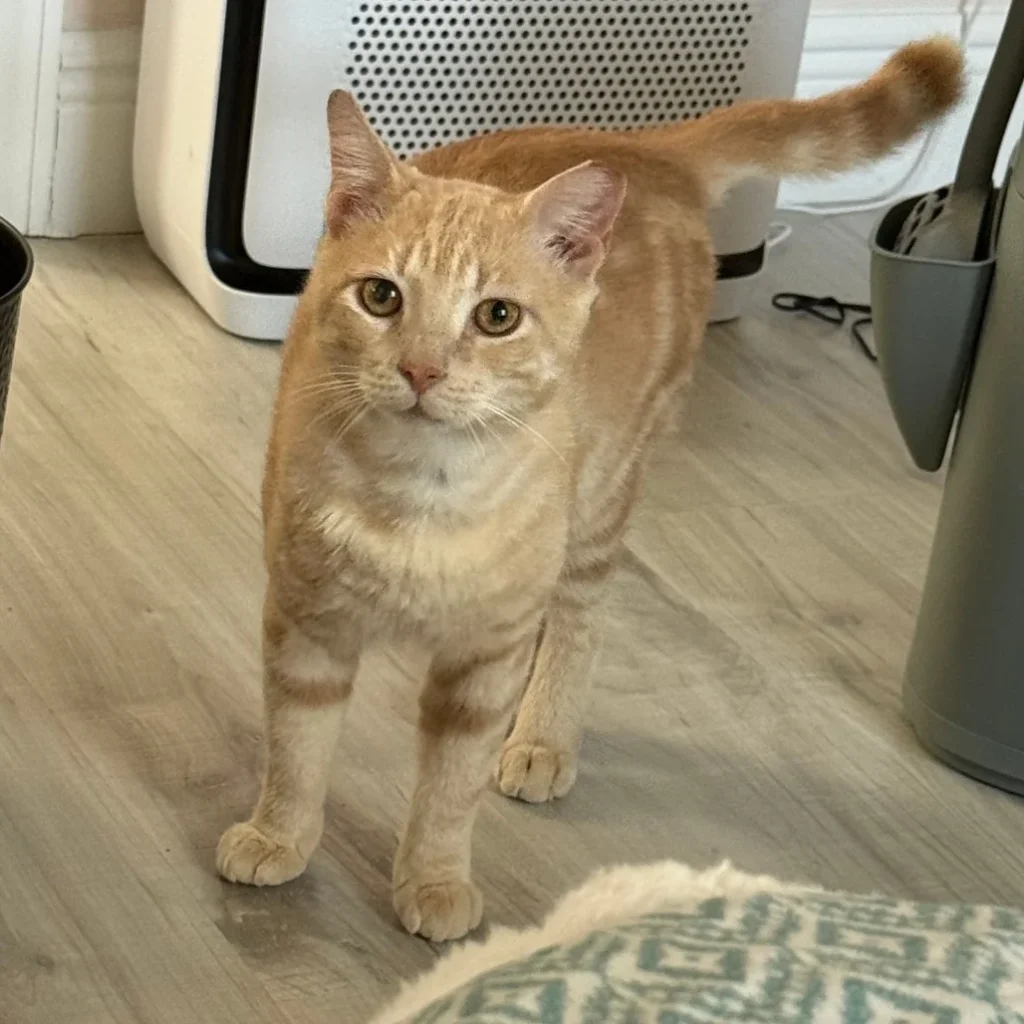
Give the Cat a Hiding Place You Can Still Check
A new rescue cat may hide.
That alone does not tell us the placement is going badly.
The problem is when the cat disappears somewhere that makes normal care difficult. A cat inside a box spring, behind a heavy appliance, or deep inside furniture may be difficult to check, medicate, or prepare for an approved veterinary appointment.
Block inaccessible gaps before the cat arrives.
Then provide another option, such as a covered carrier, cardboard box, or enclosed cat bed.
The cat can retreat while you can still confirm where they are.
If a foster cat remains in the carrier during the day but comes out overnight to eat and use the litter box, tell us that. Those details give us a clearer picture than simply saying the cat has been hiding.
Look at How People Move Through the Space
A quiet room can still feel busy if people repeatedly enter it.
Think about what happens around the cat during a normal day.
Does someone walk through the room to reach a closet? Do children open the door to check on the cat? Does the dog wait outside whenever the foster moves?
A foster cat needs periods when they can rest without someone approaching.
You do not have to whisper or stop using the room completely. We do ask household members to avoid repeatedly reaching into hiding spots, picking up a nervous cat, or bringing people in to meet them during the first part of the placement.
If children live in the home, adults need to manage those interactions.
A cat retreating to their covered bed or foster area should be left there rather than followed.
Keep Basic Care Easy to Track
We need foster families to know whether a cat is eating and using the litter box.
The room setup should make that possible.
Keep the food and water where you can check them. Clean the litter box regularly enough to notice changes in urination and bowel movements. Follow the feeding and care instructions we give you for the individual cat.
Avoid making several setup changes at once because the cat seems nervous.
If you move the food, change the litter, add several new hiding spots, and give the cat access to another room on the same day, it becomes harder to understand what changed their behavior.
Tell us if the cat stops eating, has trouble urinating, repeatedly vomits, develops ongoing diarrhea, or shows a major behavior change.
We can give better direction when we know what the cat was doing before the change and what is happening now.
Make Sure the Cat Can Get Away From Household Activity
A busy home can still foster.
We need to know whether the cat has somewhere separate from the activity.
A family in Coral Springs may have children home every afternoon. Someone in a Broward County apartment may hear hallway doors and deliveries throughout the day. Another foster may have resident cats or a dog.
Those details affect placement discussions.
A shy adult cat may need more separation from household traffic. Active older kittens may be less affected by ordinary family movement but require a more kitten-safe space.
Resident pets should not have unrestricted access to the foster cat simply because the foster appears curious about them.
Tell us about the animals and activity in your home before placement. That gives us information we can actually use when discussing which foster cats may fit.

Watch Basic Behavior Before Judging the Home
A cat hiding during the first days does not automatically mean your home feels unsafe.
Watch what else is happening.
Is the cat eating overnight? Are they urinating normally? Have they started resting closer to the entrance of the carrier? Do they remain visible when you enter instead of immediately retreating?
Those observations help us understand the cat’s adjustment.
We are less interested in whether the cat became affectionate within three days.
We need to know whether basic care is normal and how the cat’s behavior is changing.
A cat may need more time in the same setup. Another may need a change in the room. If something appears medically wrong, the cat may need approved medical attention rather than a quieter home.
Specific updates help us make that distinction.
Thinking About Fostering a Rescue Cat in South Florida?
You do not need to decide on your own whether your home is “good enough” for fostering.
Tell us what space you have, who lives with you, and whether you have resident pets. We can discuss placements based on the actual home.
We provide foster families with food, supplies, approved medical care, and care instructions. We also need fosters to communicate when eating, litter box use, or behavior changes.
If you are considering opening your home to a rescue cat, you can learn how our foster program works and apply with Happy Whiskers Animal Coalition.