
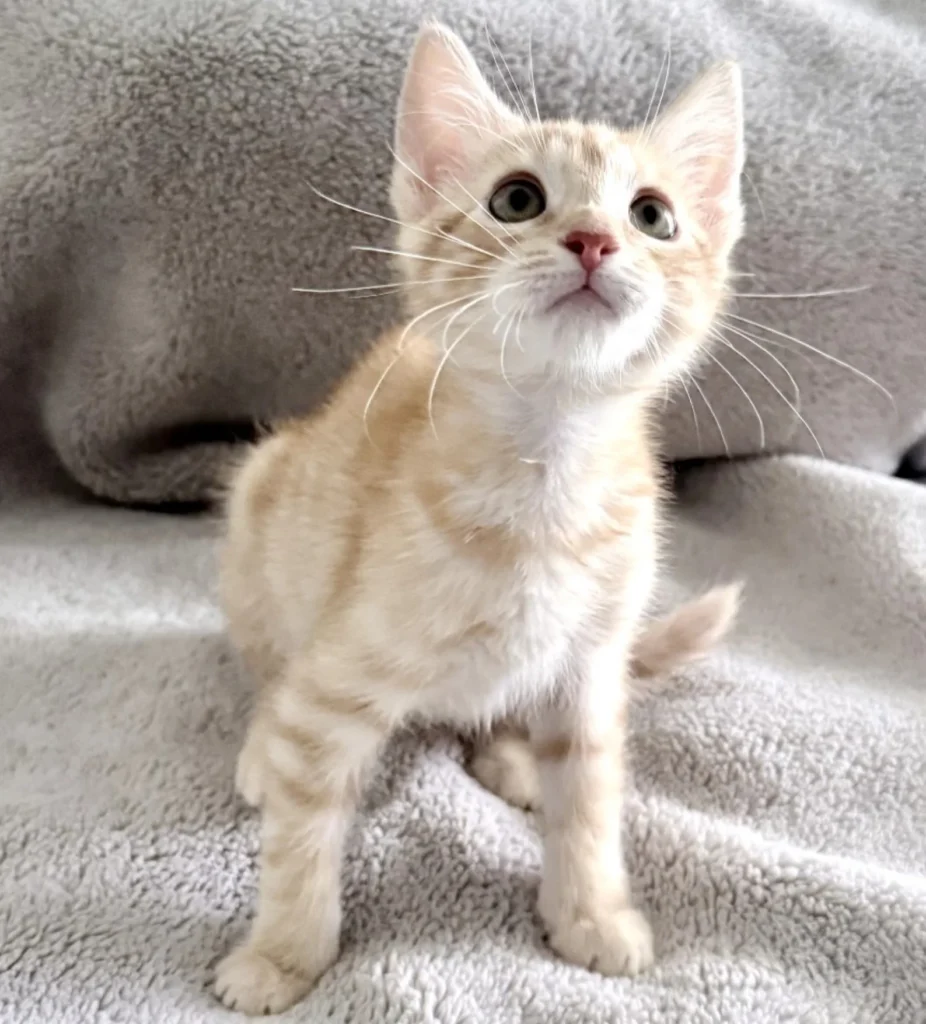
A shy foster cat may not be ready for petting, but they may watch a toy move across the floor.
That reaction gives us information.
The best toys for building a foster cat’s confidence allow the cat to watch, approach, and play without being handled or cornered. Wand toys, lightweight balls, tunnels, and simple food puzzles can all work depending on the cat.
You do not need a large collection of toys. The goal is to find an activity the individual cat is willing to investigate.
Key Takeaways: Which Toys Help Foster Cats Build Confidence?
- Wand toys let shy cats interact with a person from a distance.
- Lightweight balls and soft toys give cats something to investigate on their own.
- Food puzzles may work for cats that are already eating reliably and motivated by food.
- Tunnels and covered spaces let nervous cats play near a place they can retreat to.
- String toys, loose feathers, and toys with small pieces should be put away after supervised play.
- Watching how a foster cat plays can give us useful information about their confidence and energy.
Wand Toys Give Shy Cats More Distance
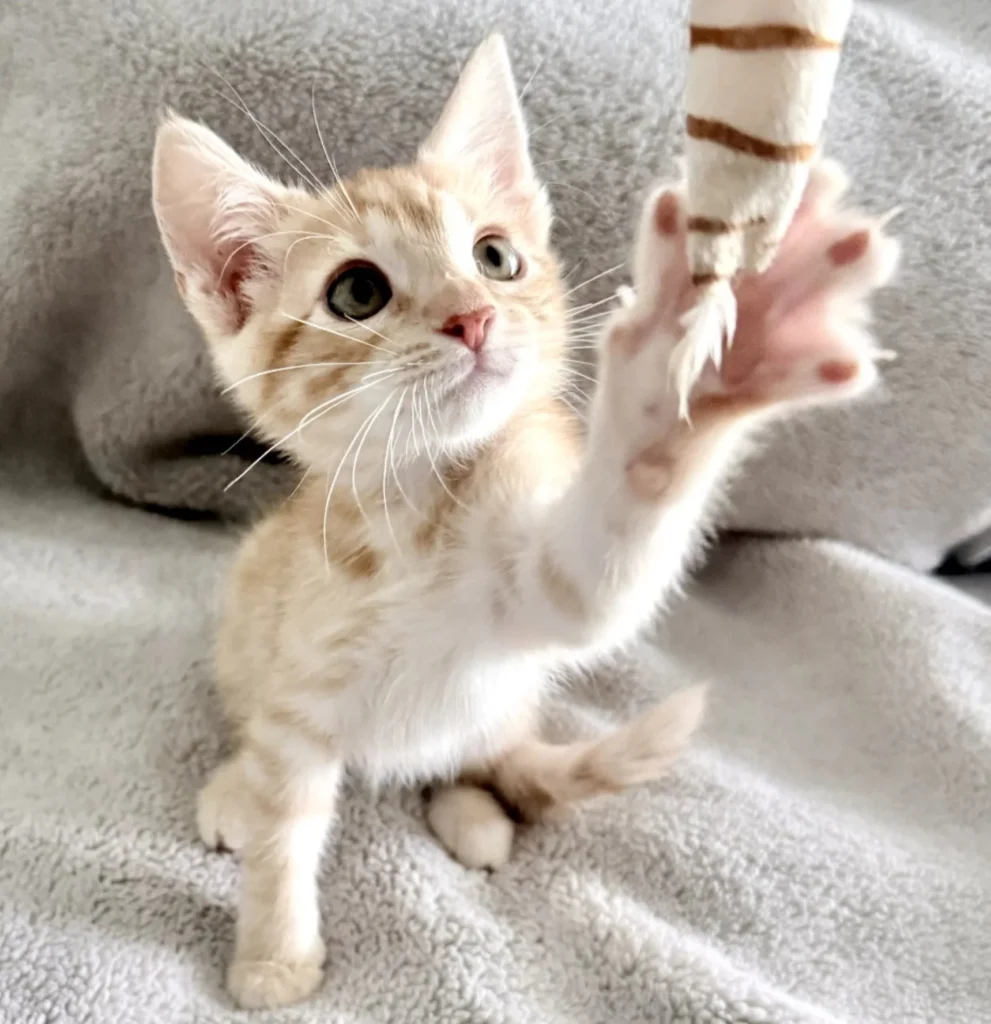
Wand toys are often one of the first toys we try with a cautious foster cat.
You can sit several feet away and move the toy without reaching toward the cat. A cat who retreats from a hand may still watch feathers or fabric move slowly across the floor.
If you are fostering cats in Broward County, this type of low-contact play can help you learn how the cat responds before trying closer interaction.
Start with slow movement away from the cat rather than waving the toy directly over their head. A nervous cat may only watch during the first few attempts.
Later, they may track the toy with their head, reach out once, or take several steps from a hiding place.
Those reactions tell you the cat is interested even if they are not ready to approach you.
Put wand toys away when the play session ends. Strings, feathers, and detachable pieces should not be left with a foster cat unsupervised.
Lightweight Toys Show Us What Cats Do on Their Own
Some foster cats play when no one is actively watching them.
A soft mouse or lightweight ball may remain untouched all afternoon and end up across the room the next morning. A shy kitten may begin batting a toy after the lights are off and the house becomes quiet.
That is useful information.
Try a few simple options such as:
- lightweight balls
- soft fabric mice
- quiet crinkle toys
- small toys the cat can easily bat or carry
For a nervous cat, we may begin with quieter toys instead of hard plastic balls or toys with loud bells.
You do not need to repeatedly place the toy in front of the cat. Leave several safe options in the foster area and see which ones move.
The toys a cat chooses independently can tell us something about their activity and play preferences.
Food Puzzles Work Best After a Cat Is Eating Reliably
A puzzle feeder or simple treat toy can encourage a curious cat to move around the foster space.
We usually want to know that the cat is eating normally before making food harder to access.
Once a cat is eating reliably, a simple puzzle may give them another reason to sniff, paw, and investigate. Keep the first option easy. The goal is to see whether the cat engages, not to create a difficult feeding challenge.
Food-based toys also need to fit the cat’s care plan.
If a foster cat is on medication, has a sensitive stomach, or has specific feeding instructions, ask us before adding treats or changing how meals are offered.
A food puzzle is useful when it gives the cat an activity without interfering with our ability to track appetite.
Tunnels Let Nervous Cats Play Near Cover
A shy cat may be more willing to interact when they know they can retreat.
Tunnels, pop-up cubes, and cardboard boxes can give the cat a place to watch the room while remaining partially covered. Try moving a wand toy past the tunnel opening or placing a small toy nearby.
Do not reach into the hiding space to make the cat play.
Watch what they choose to do.
A kitten may reach one paw from the tunnel. An adult cat may follow the toy with their eyes for several sessions before stepping out.
The covered area gives the cat control over how far they move into the room.
We also want foster families to notice which hiding options a cat uses. A cat who begins playing near the entrance of a tunnel after spending several days completely hidden is showing us a change in behavior.
Avoid Toys That Overwhelm or Create a Safety Problem
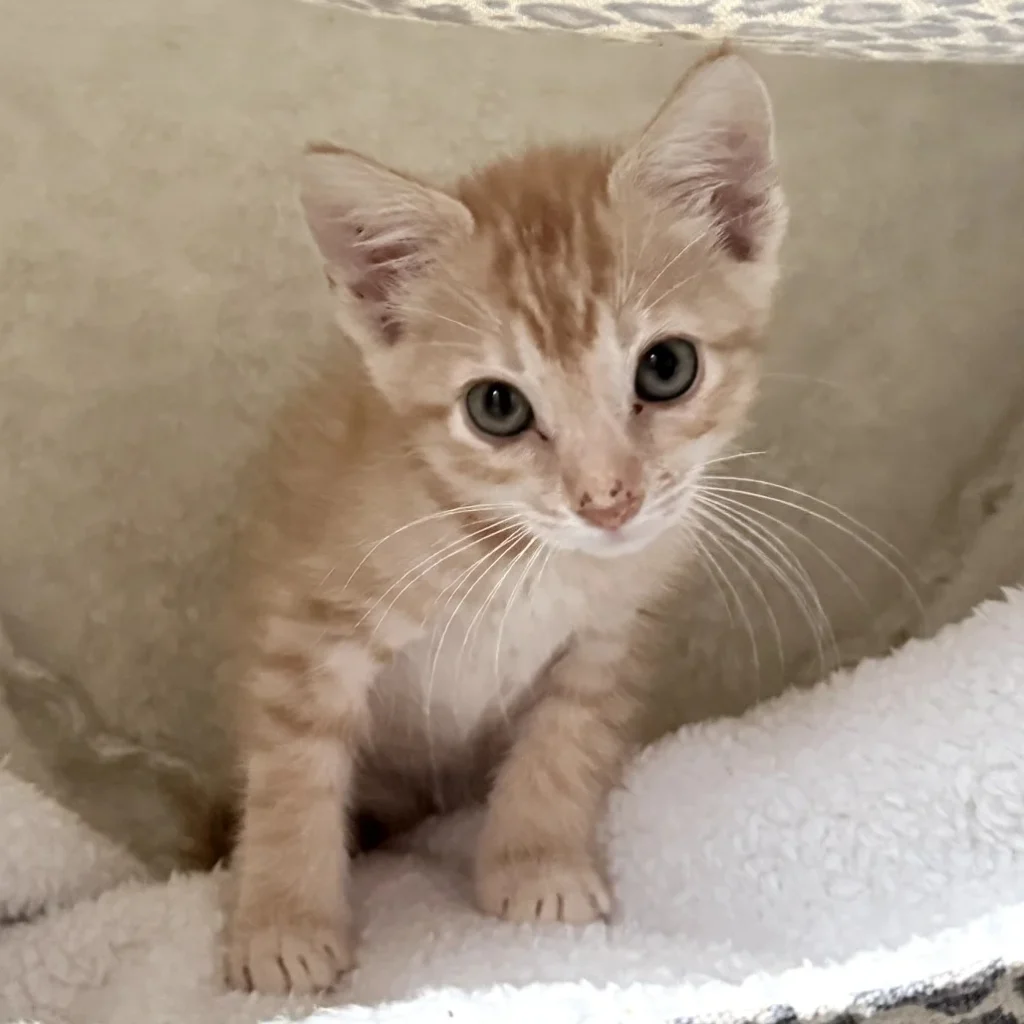
A nervous cat may retreat from toys that move suddenly or make unfamiliar noise.
Battery-powered toys, flashing lights, and loud rattling toys are not always the best first choice for a cat who is already hiding. If the cat repeatedly backs away or remains more withdrawn after the toy is introduced, remove it and try something simpler.
Safety matters too.
Put away toys with:
- long strings or cords
- loose feathers
- rubber bands
- small detachable pieces
- material the cat is actively chewing apart
Kittens can be especially quick to chew, climb, and pull apart toys.
Watch a new foster with a toy before deciding it is safe to leave in the room.
Watch How the Cat’s Play Changes
You do not need a foster cat to chase a toy across the room before play tells you something.
A cat may first watch the wand toy. Several days later, they reach toward it. Eventually, they may leave their usual resting place when you bring the toy into the room.
We ask foster families to share updates and observations because these changes help us understand the cat.
Tell us what the cat plays with, when they become active, and whether they prefer playing alone or interacting with you.
For example, “She doesn’t play” gives us very little information. “She ignores toys during the day but moves the soft balls around overnight” tells us more about when and how the cat feels comfortable enough to play.
These details can also help us answer adopter questions about the cat’s energy and routine later.
Thinking About Fostering a Cat in South Florida?
You do not need to buy a room full of enrichment products before fostering.
We provide foster families with food, supplies, approved medical care, and care instructions for the cats placed with them. We can also help you understand what to watch when a shy cat begins interacting with their foster space.
If you are considering fostering, you can learn how our foster program works and apply with Happy Whiskers Animal Coalition.