
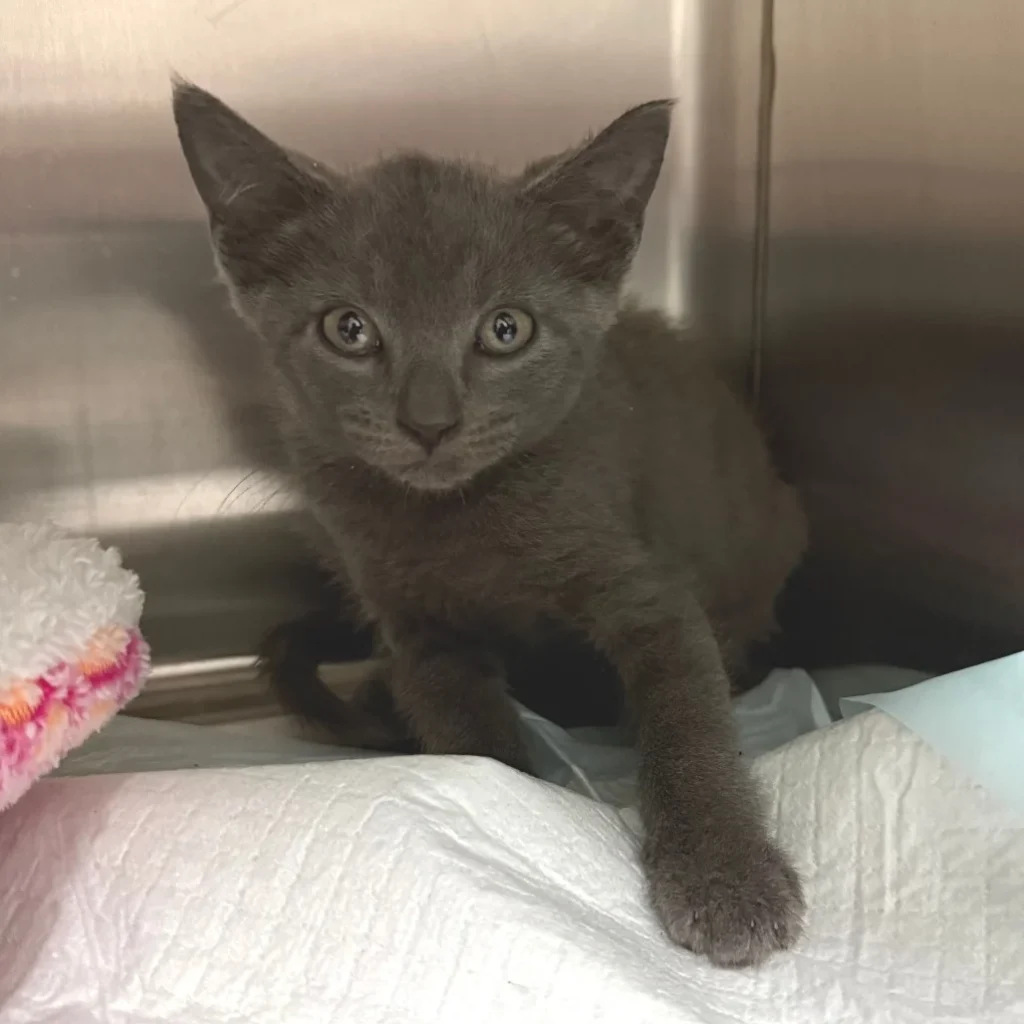
You may have a bathroom, bedroom, or small office available for a foster cat and still wonder whether your home will feel safe to them.
Will normal household noise scare them? What if they hide? How do you know whether you are giving them enough space?
A safe foster home for cats gives them somewhere secure to retreat, keeps basic care easy to access, and lets them learn what happens around them without being repeatedly forced into interaction.
The size or appearance of the home tells us less than how the foster space is set up and managed.
Key Takeaways: What Helps a Foster Home Feel Safe to a Cat?
- The cat needs a secure area where food, water, litter, and an appropriate hiding place are easy to find.
- Safe hiding options let a cat retreat without disappearing somewhere you cannot monitor them.
- Repeated daily routines help a foster cat learn what happens in the home.
- People should respond to the cat’s body language instead of repeatedly forcing handling.
- Doors, windows, balconies, and resident pets need to be physically managed.
- Foster families should report specific changes in eating, litter box use, and behavior so we can help decide what happens next.
Give the Cat Somewhere They Can Retreat
A foster cat needs a place to move away from activity.
For many placements, that means beginning in a bathroom, bedroom, office, crate, or another contained setup. The exact space depends on the cat’s age, health, and care needs.
If you are fostering cats in Broward County, we want to know what space you actually have before placing a cat with you. Someone with a bathroom may be able to foster a different cat than someone with a kitten-safe room or space for a crate.
The foster area should keep food, water, and litter easy to locate.
It should also give the cat somewhere appropriate to hide.
A covered carrier, box, or cat bed may work better than allowing a nervous cat to disappear behind a heavy appliance or inside furniture where you cannot check on them.
The cat can retreat without becoming inaccessible.

Let the Cat Learn What Happens Around Them
A new foster cat does not know what your footsteps mean.
They do not know whether the bedroom door opening means food, handling, medication, or several unfamiliar people entering the room.
They learn by watching what happens repeatedly.
You enter, refresh the water, and leave. Food arrives around the same part of the day. The litter box is cleaned. You sit nearby without reaching into the hiding spot.
Over time, those repeated interactions give the cat information about your home.
This is one reason we do not recommend constantly checking a nervous cat or introducing them to every person in the household immediately.
The cat needs enough ordinary experiences to learn which parts of the day require their attention and which do not.
Use Hiding Spots You Can Still Monitor
Hiding is common when a cat enters foster care.
We do not need to remove every hiding option to make the cat interact.
We do need to track basic care and reach the cat when necessary.
A cat may need medication, approved veterinary care, or transport. We may also ask whether they have eaten, urinated, or had a bowel movement.
That becomes difficult if the cat has crawled into a box spring or disappeared behind furniture you cannot move.
Before the cat arrives, block unsafe or inaccessible gaps and provide another covered space.
If the cat spends most of the day there but eats overnight and uses the litter box, tell us that. The location of the cat matters less than what their overall care and behavior are showing us.
Respond to the Cat Before Pushing Interaction
A foster cat may watch you without approaching.
Another may walk directly over for attention. Some cats accept petting but immediately retreat when someone tries to pick them up.
Watch the response before continuing.
If the cat moves away when you reach toward them, stop reaching. If they remain nearby after petting, you can see whether they choose to approach again. A wand toy may work better for a cat interested in movement but uncomfortable with hands.
The goal is to learn how the individual cat responds to people.
Repeatedly pulling a cat from hiding or holding them in place may only show us how they behave when they cannot leave.
A cat who has the option to move away gives us clearer information about which interactions they are beginning to accept.
Physically Manage the Risks the Cat Cannot Understand
A foster cat does not know that the front door opens to a parking lot or that a balcony screen is not a secure outdoor enclosure.
Those risks need physical management.
In South Florida foster homes, we want people to check exterior doors, windows, balconies, screened patios, and busy entryways before the cat has access to them.
Resident pets also need to be managed based on the placement. Do not release a foster cat into the home to “see how they do” with an unfamiliar dog or cat.
We need to know about resident animals before placement so we can discuss separation and the appropriate setup.
The same applies to cords, unsafe plants, small objects, moving furniture mechanisms, and spaces where kittens can become trapped.
For safety problems, prevent access instead of waiting for the cat to learn a rule.

Tell Us What the Cat Is Actually Doing
Foster families do not need to decide alone whether every behavior is normal.
We need useful observations.
“He’s scared” gives us very little to work with.
“He stays in the carrier during the day, eats overnight, uses the litter box, and watches me when I sit across the room” gives us a much clearer picture.
Tell us if the cat stops eating, has trouble urinating, repeatedly vomits, develops ongoing diarrhea, appears physically weak, or shows a major change from behavior we already know.
We provide food, supplies, approved medical care, and care instructions for our foster cats. When something changes, specific updates help us decide whether the cat needs more time, a change in setup, or approved medical attention.
Thinking About Fostering a Cat in South Florida?
You do not need to decide for yourself whether your home looks like a “foster home.”
Tell us what space you have, who lives with you, and whether you have resident pets. We can use that information when discussing placements.
A bathroom may work for one cat. A bedroom may work for another. A crate or more controlled setup may be appropriate for a cat we need to monitor closely.
If you are considering fostering, you can learn how our foster program works and apply with Happy Whiskers Animal Coalition.