
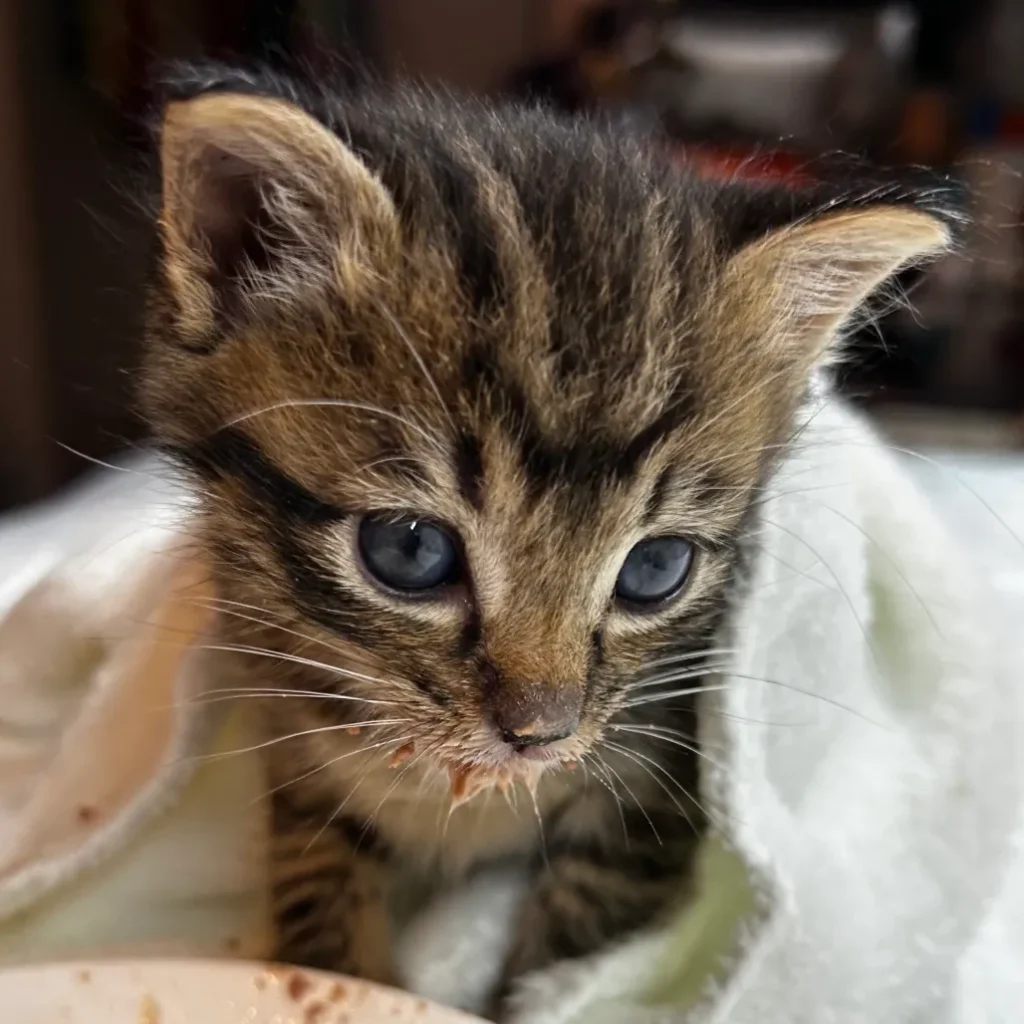
Kittens can change quickly during foster care.
A kitten that needs help eating at one stage may soon be climbing, using a litter box, and chasing littermates. For a foster, these changes affect what needs to be watched and which updates we need to hear about.
You do not need to memorize every kitten milestone. You do need a basic idea of how age affects feeding, movement, social behavior, and the amount of monitoring a kitten may need.
Here’s what foster homes should know about kitten development.
Key Takeaways: What Should Foster Homes Expect as Kittens Develop?
- A kitten’s age affects feeding, warmth, safety, and how closely they need to be monitored.
- Very young kittens require different care than weaned kittens eating on their own.
- Appetite, weight, energy, stool, and behavior changes give us useful information about development.
- Gentle interaction and play help us see how kittens are responding to people and their surroundings.
- Care instructions may change as kittens grow.
- Clear foster updates help us decide when a kitten needs closer attention or a change in care.
Why Kitten Development Matters in Foster Care
A two-week-old kitten and an eight-week-old kitten should not have the same foster routine.
Very young kittens may need help staying warm and eating. Older kittens may be eating independently, using a litter box, and spending much of the day playing.
Age affects the type of foster placement we consider too.
A foster working a regular full-time schedule may be able to care for weaned kittens that eat on their own. That schedule generally does not fit newborn kittens needing frequent care.
Understanding the kitten’s developmental stage helps explain why we ask about your schedule before making a foster placement.
Our guide to fostering cats in Broward County explains more about how foster placement and temporary care work locally.
Understanding the Main Stages of Kitten Growth
Kittens develop quickly, and their care can change within a few weeks.
Newborn to about 2 weeks: Kittens at this stage depend heavily on warmth and feeding support. They require close monitoring and are generally better suited for fosters prepared for neonatal care.
About 2 to 4 weeks: Eyes are open, movement improves, and kittens begin responding more clearly to their surroundings. They still need a contained, safe setup and may require feeding support depending on their age and condition.
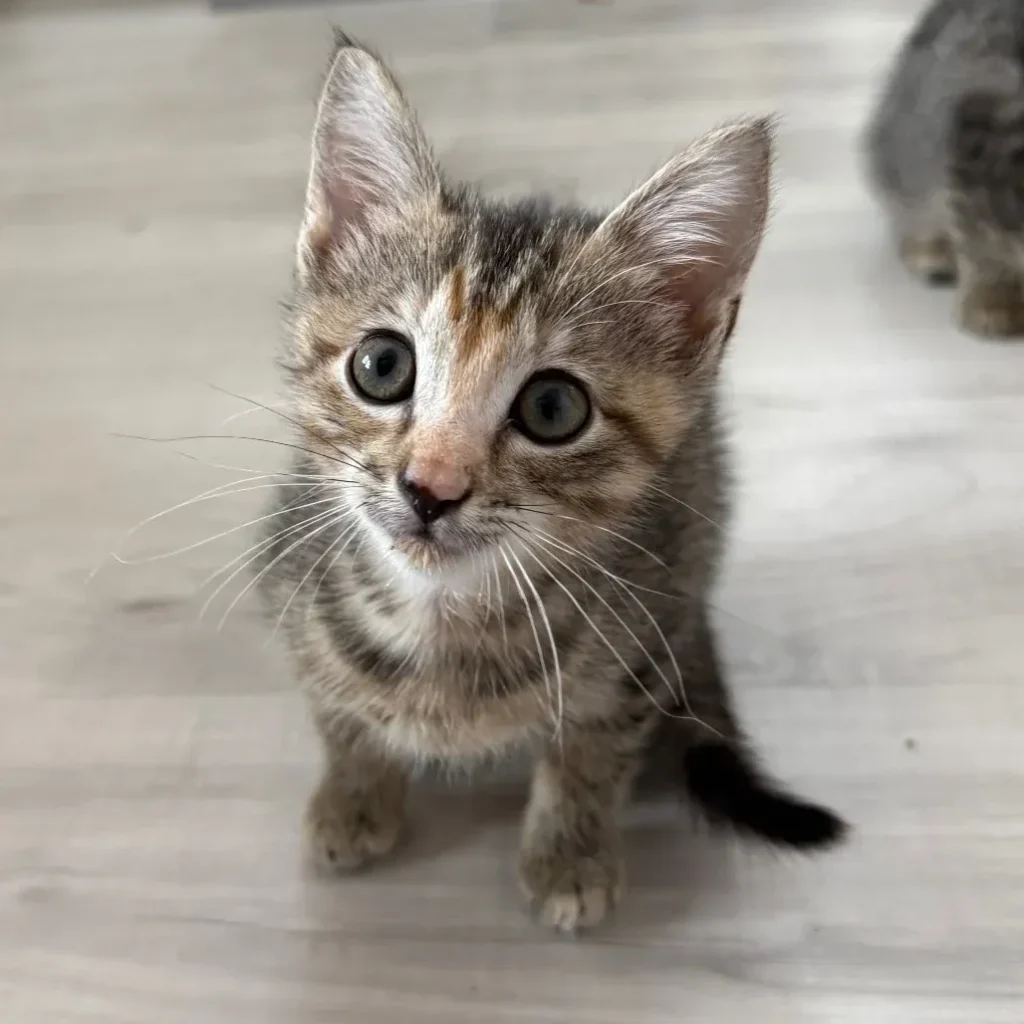
About 4 to 8 weeks: Kittens become more active. They may begin eating independently, practicing litter box use, playing with littermates, and showing clearer behavior around people.
Around 8 weeks and older: Older kittens generally have a more established routine. Foster care often focuses on continued observation, normal daily care, handling, play, and completing the steps needed before adoption.
These ages are general ranges, not a substitute for evaluating the individual kitten.
A kitten’s condition, weight, health, and history can affect the care instructions we give the foster.
What Foster Homes Should Watch During Development
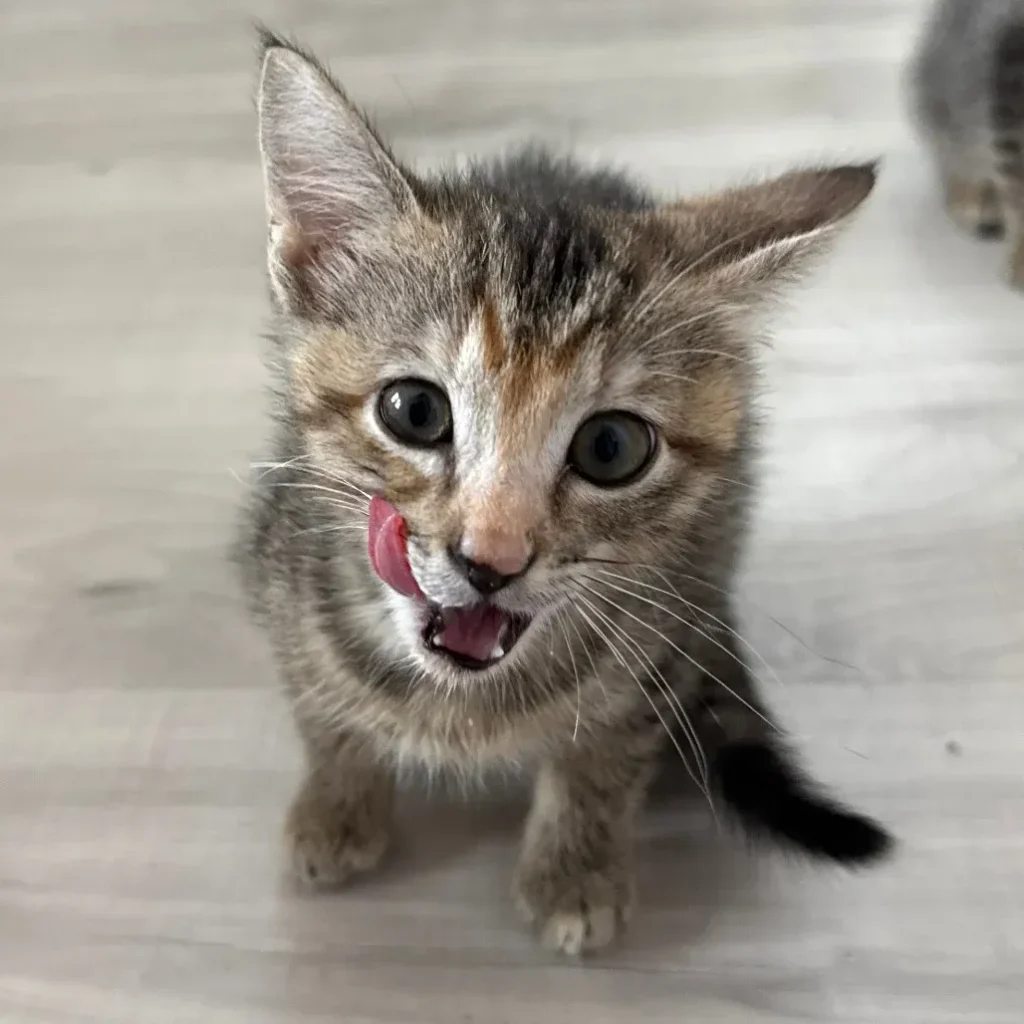
Fosters see kittens every day, which makes changes easier to notice.
We want to know about appetite, energy, weight when monitoring is required, stool, litter box use, and sudden behavior changes.
The useful update is specific.
“One kitten seems off” gives us little information. “She normally finishes her wet food and plays with the litter, but she ate very little this morning and has been sleeping alone” gives us something we can respond to.
A foster does not need to decide what the problem is.
If a kitten stops eating normally, becomes unusually quiet, develops diarrhea, or shows another concerning change, tell us. We can then coordinate the appropriate next step, including approved veterinary care when needed.
Your job is to notice and report the change, not diagnose it.
Social Development Changes as Kittens Grow
As kittens become more active, we begin seeing how they respond to people, handling, play, and normal household activity.
A young kitten may initially stay at the back of the room when someone enters. Over time, the foster may notice that the kitten remains visible, approaches a toy, or begins eating while a person is nearby.
Play changes too.
Kittens become faster and more coordinated. They chase, pounce, wrestle, and grab. Using appropriate toys instead of encouraging kittens to attack hands gives them a better play routine to continue after adoption.
Fosters also help us notice differences between littermates.
One kitten may constantly seek another kitten for sleep and play. Another may spend more time exploring independently.
We use those observations when preparing adoption information.
How We Support Foster Homes as Kitten Needs Change
We match foster placements based partly on the care the kittens currently need.
A new foster may be better suited for weaned kittens already eating independently. A foster with neonatal experience and the required availability may be able to handle kittens needing frequent feeding and closer monitoring.
Once kittens are in foster care, instructions may change as they grow.
We may ask a foster to monitor weight, change the food being offered, prepare for a scheduled veterinary appointment, or report a specific symptom if it appears.
This is why communication matters during kitten placements.
If your work schedule changes or the care becomes harder to manage than expected, tell us early. We need time to coordinate help or consider another placement rather than finding out after appointments or daily care have been missed.
How Kitten Development Affects Adoption Planning
Age alone does not tell us everything about a kitten preparing for adoption.
We also need to know how the kitten is eating, using the litter box, behaving, and responding to normal care.
A foster may tell us that a kitten eats well and plays constantly but still hides when someone enters the room. Another may approach people immediately but become distressed when separated from a littermate.
Those details help us describe the kitten more accurately to potential adopters.
Veterinary care and other adoption requirements also need to be completed according to the kitten’s care plan.
Foster updates give us the day-to-day information we cannot get from a single appointment or short meeting.
Thinking About Fostering Kittens in South Florida?
You do not need to know every stage of kitten development before fostering.
We need you to follow the care instructions for your placement, watch the kittens during normal daily care, and communicate clearly when something changes.
At Happy Whiskers Animal Coalition, we consider the kitten’s age and care needs along with the foster’s schedule and home setup before making a placement.
If you are in Broward County or a nearby South Florida community and are considering kitten fostering, you can learn how our foster program works and tell us about your availability, resident pets, and space.