
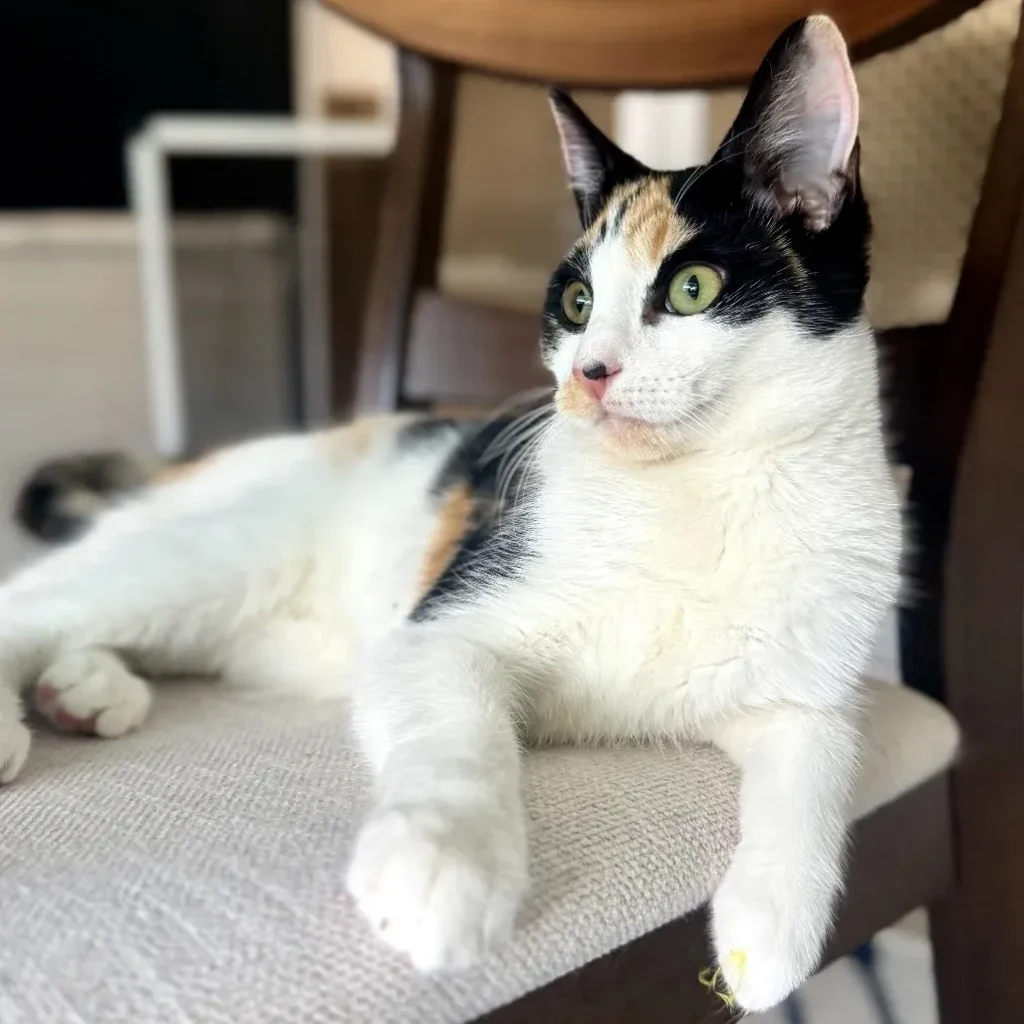
An indoor cat may spend hours sleeping and still race through the house at night, climb the furniture, or repeatedly ask for attention.
That can make it difficult to judge how much activity they actually need.
Most indoor cats need several opportunities to play, scratch, climb, watch, or investigate during the day. They do not need constant entertainment.
The amount varies by age, energy, health, and personality. The better question is whether your cat has appropriate outlets and can settle after using them.
Key Takeaways: How Much Daily Enrichment Does an Indoor Cat Need?
- Most indoor cats benefit from several short enrichment opportunities during the day.
- Interactive play, scratching surfaces, climbing areas, window views, and food puzzles can provide different types of activity.
- Kittens and active young cats usually need more frequent play than calm adults or seniors.
- Repeated nighttime activity, destructive scratching, or constantly bothering other pets may mean a cat needs better outlets.
- A sudden behavior change should not automatically be blamed on boredom.
- Watch which activities your individual cat actually uses before buying more toys or equipment.
How Much Mental Stimulation Does an Indoor Cat Usually Need?
There is no fixed number of enrichment minutes that fits every indoor cat.
For many adult cats, several short activities spread throughout the day are easier to maintain than one long play session. You might use a wand toy for five or ten minutes in the morning, leave access to a scratching post and window perch during the day, and play again in the evening.
A kitten may need more frequent activity. A quiet adult cat may watch birds for twenty minutes and then sleep most of the afternoon.
If you are considering adopting a cat in South Florida, ask what the foster has observed about the individual cat’s activity.
We may know that a cat regularly starts playing after dinner, carries toys around overnight, or ignores most toys but spends hours watching movement through a window.
Those details are more useful than assuming every indoor cat needs the same routine.
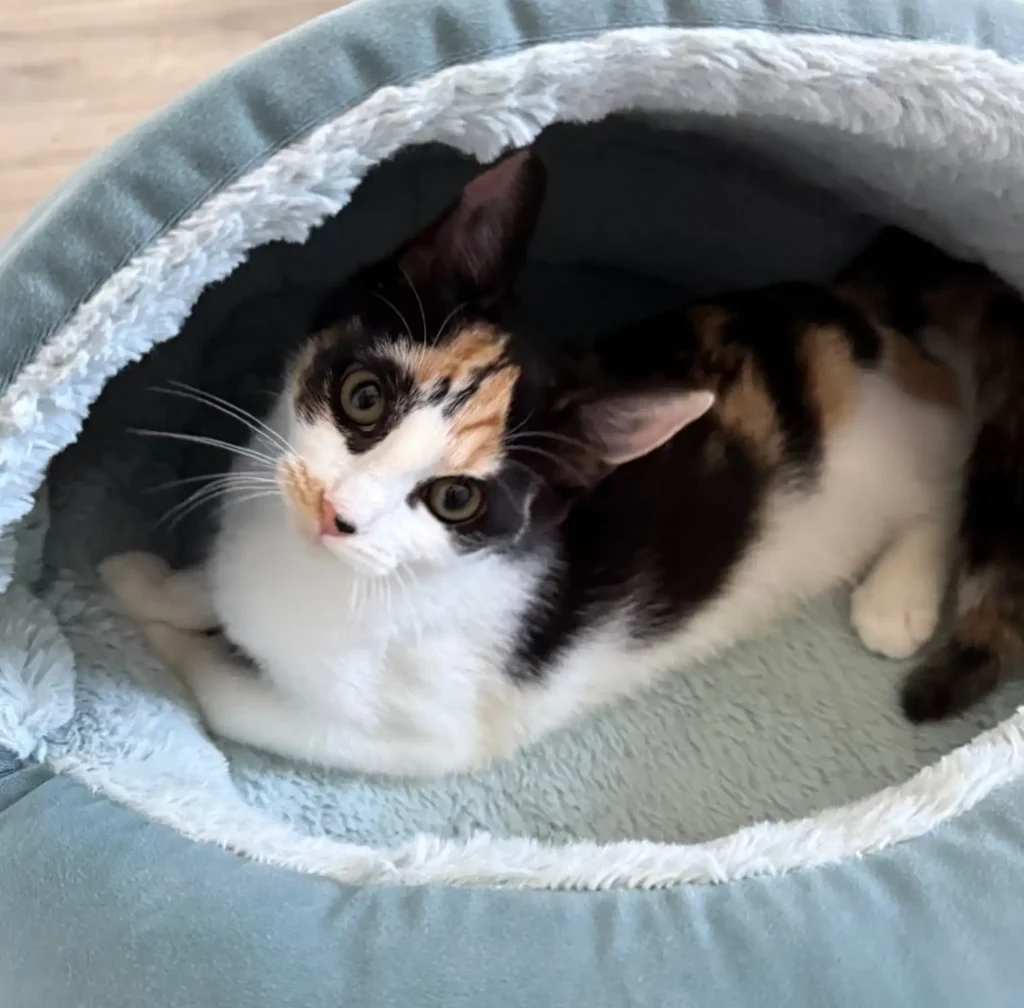
Look at What the Cat Can Do in the Home
Mental stimulation for cats does not have to come from direct play with a person.
Look at the options available during an ordinary day.
Can the cat scratch somewhere appropriate? Is there a safe place to climb or sit above floor level? Can they watch household activity or look through a secure window? Are there toys they can move or investigate without you?
Interactive play adds another type of activity because the cat can track and chase movement.
The goal is to give the cat several appropriate ways to use their attention and energy.
A room with twenty toys on the floor may still be uninteresting if the cat ignores all of them. A cat who uses one scratching post, watches birds from a chair, and chases a wand toy every evening may already have a routine that works well.
Watch what the cat uses.
Signs Your Indoor Cat May Need Better Outlets
Under-stimulation can show up in different ways.
You may notice:
- repeated attempts to play with your hands or ankles
- knocking objects down or investigating the same off-limits areas
- destructive scratching when appropriate surfaces are not being used
- intense nighttime activity
- repeatedly bothering another cat that is trying to rest
- frequent attention-seeking that returns immediately after interaction
These behaviors do not prove that a cat is bored.
Look at the pattern and what happens after you provide an appropriate activity.
For example, a young cat who repeatedly chases ankles in the evening may settle after a focused wand-toy session. A cat scratching one side of the couch may begin using a scratching surface placed directly beside that location.
If a cat suddenly becomes withdrawn, stops eating, over-grooms, becomes unusually vocal, or shows a major behavior change, do not assume they simply need a new toy. Health problems and stress can also affect behavior.
Use Simple Enrichment Before Buying More Products
You do not need a room full of cat equipment.
Start with a few different types of activity.
A wand toy lets the cat track and chase. A cardboard scratcher or scratching post gives them an appropriate scratching surface. A stable chair or cat tree near a secure window creates a place to observe outdoor movement.
For cats already eating normally, a simple puzzle feeder may add activity to mealtime. Follow any feeding or medical instructions you have for the individual cat before changing how food is offered.
Rotate toys if the cat loses interest.
We often learn more from foster updates such as “she plays with the wand toy after dinner but ignores balls” than from hearing that a cat has “lots of toys.”
The specific activity tells us something about the cat’s preferences and energy.
Newly Adopted Cats May Start With Less
A newly adopted cat may not play immediately.
They are learning the home, sounds, people, and routine. A cat who ignores a wand toy during the first two days may begin following it with their eyes later or playing once they are more comfortable moving around the room.
Start with a few options instead of repeatedly presenting new toys.
A scratching surface, appropriate hiding area, one or two safe toys, and low-pressure interactive play give you enough to observe.
Do not pull a cat from hiding because you think they need activity.
Watch when the cat begins moving around on their own. You can then offer play or another activity and see whether they engage.
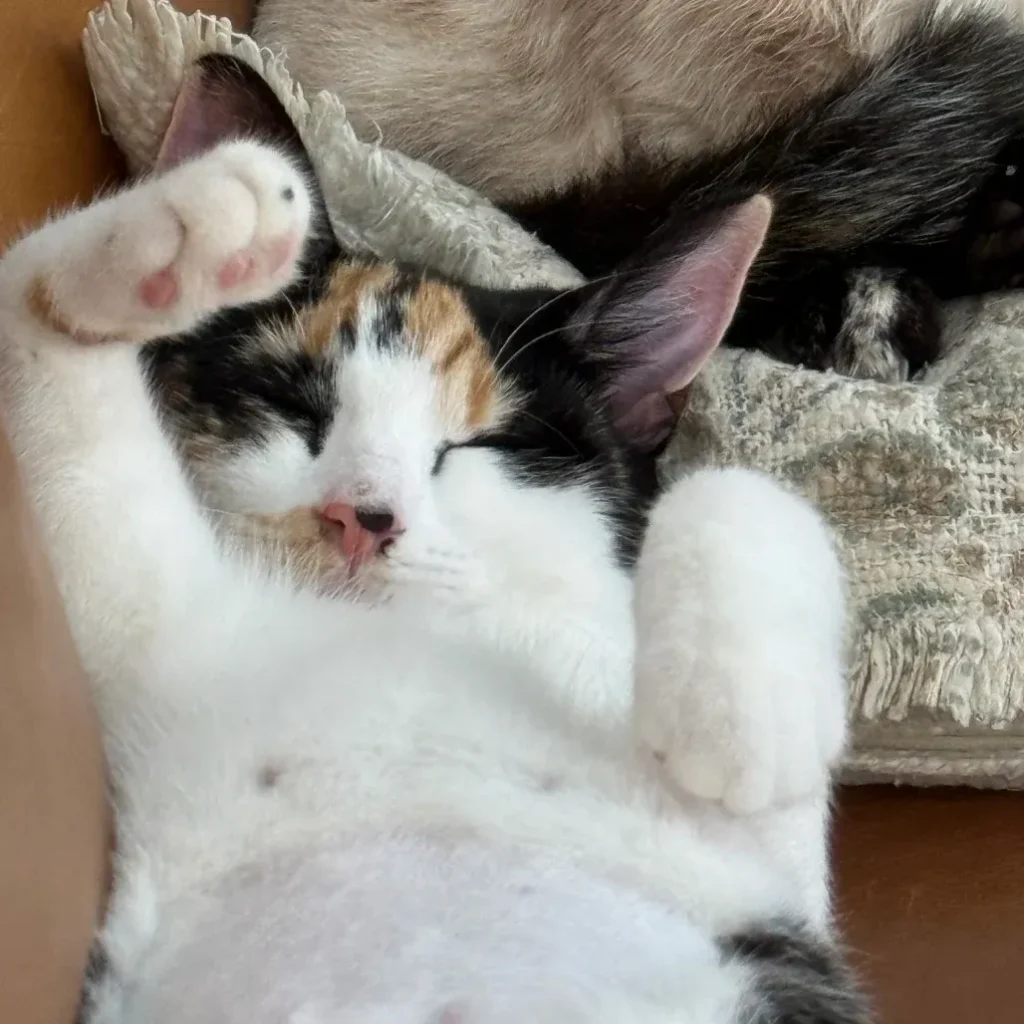
Age and Personality Change the Amount of Enrichment a Cat Needs
Kittens often need several activity periods throughout the day.
They climb, chase, investigate objects, and repeatedly return to the same areas. Safe toys, appropriate climbing options, and interactive play give them somewhere to direct that activity.
Adult cats vary widely.
One may spend much of the day resting and become active for short periods in the morning and evening. Another may regularly seek play and investigate every new object brought into the home.
Senior cats may still play but prefer slower movement, shorter sessions, and options that do not require high jumps.
Health also matters. A cat recovering from medical care or living with mobility limitations may need different activities from a healthy young cat.
Match the activity to the cat you actually have.
Thinking About Adopting an Indoor Cat in South Florida?
Foster homes help us observe what cats do during ordinary days.
We may know which toys a cat uses, when they become active, whether they seek interaction, and how much play they regularly initiate.
Ask about those patterns before adopting.
An active young cat may need a household prepared for several play sessions and regular interaction. A quieter adult may fit someone looking for a cat who spends more time resting nearby.
When you are ready, you can learn more about cats available for adoption through Happy Whiskers and ask us what their foster families have observed.