
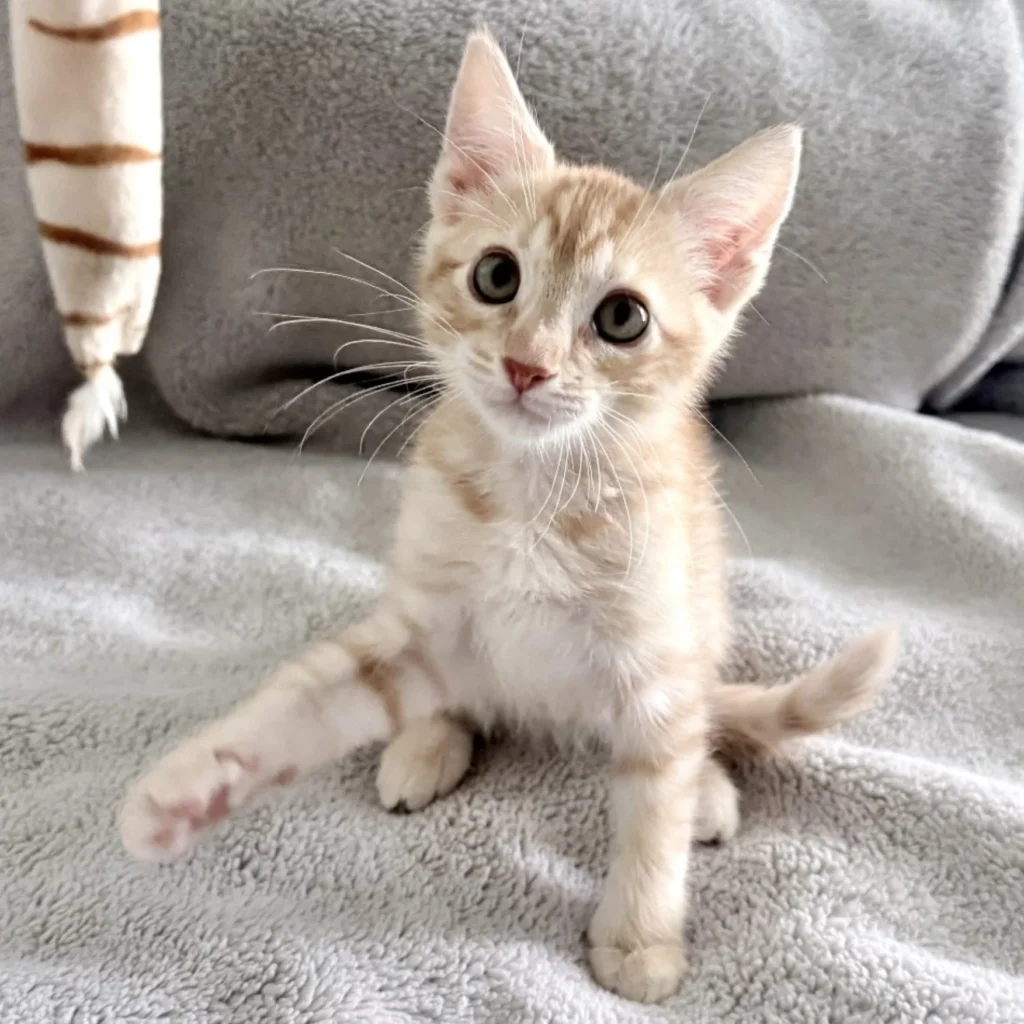
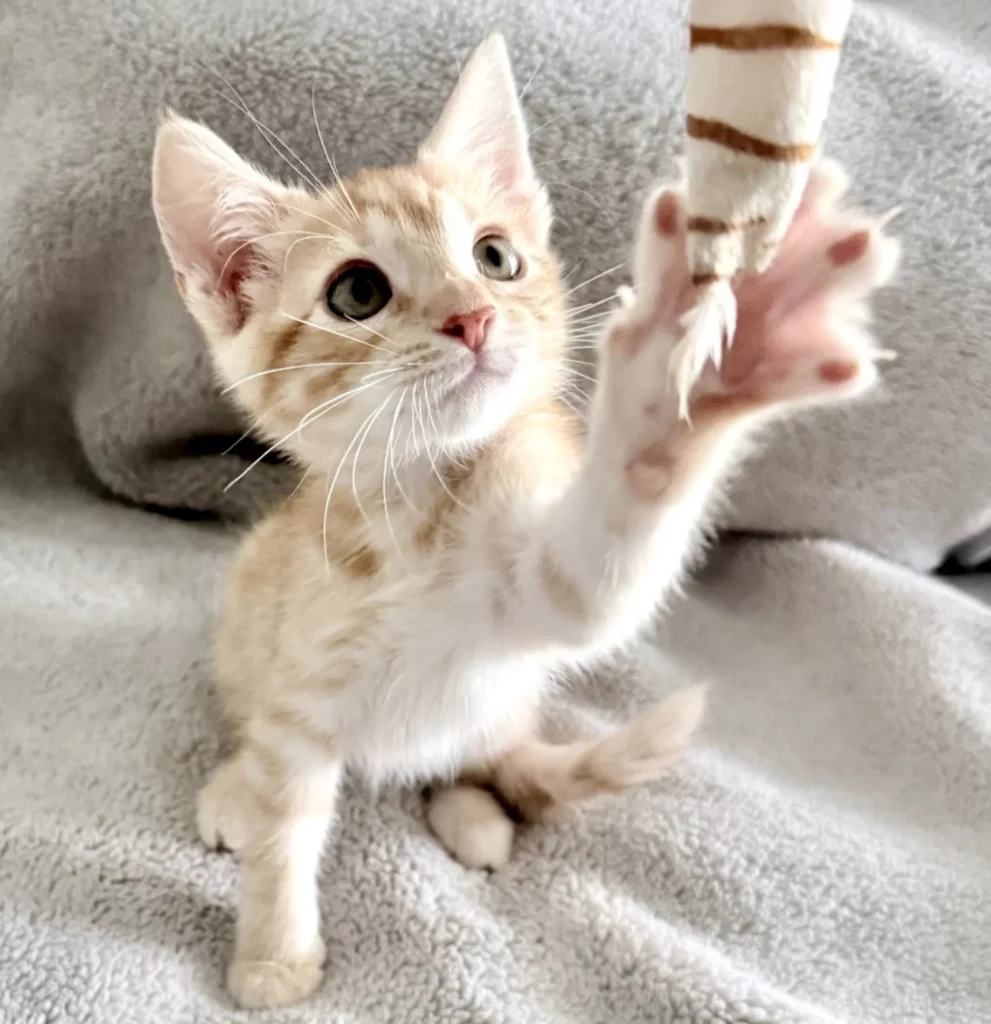
A kitten chasing a wand toy may look like simple play. For a rescue kitten, that interaction can tell us a lot.
Will the kitten come out of hiding to chase? Are they comfortable playing near a person? Do they play intensely and then settle, or stay active for long periods?
Play gives kittens an appropriate way to use normal chasing and pouncing behavior. It also gives shy kittens a lower-pressure way to interact with people before they are comfortable being handled.
For foster families, those short play sessions help us learn how a kitten is adjusting and what they may need in an adoptive home.
Key Takeaways: How Does Play Help Rescue Kittens?
- Play can give shy kittens a way to interact with people without immediate handling.
- Toys provide an appropriate outlet for chasing, pouncing, biting, and kicking.
- Foster families can use play to observe a kitten’s energy level and confidence.
- Changes in play behavior may show that a kitten is becoming more comfortable in the home.
- Play observations help us describe kittens more accurately to potential adopters.
Play Gives Shy Kittens a Lower-Pressure Way to Interact
Some rescue kittens are comfortable with people almost immediately. Others hide when someone enters the room or move away when a hand reaches toward them.
A toy creates distance.
A shy kitten may not accept petting but may still watch a wand toy move across the floor. The kitten can stay under a chair or near a hiding place and decide whether to approach.
The first interaction may be one paw reaching toward the toy.
A few days later, the same kitten may chase it across the room.
We do not treat play as proof that a kitten is suddenly comfortable with all handling. It gives us another way to interact with the kitten while watching how their confidence changes.
Our guide tofostering cats in Broward County explains how foster homes give cats and kittens time to adjust before adoption.
Toys Give Kittens an Appropriate Outlet for Chasing and Biting
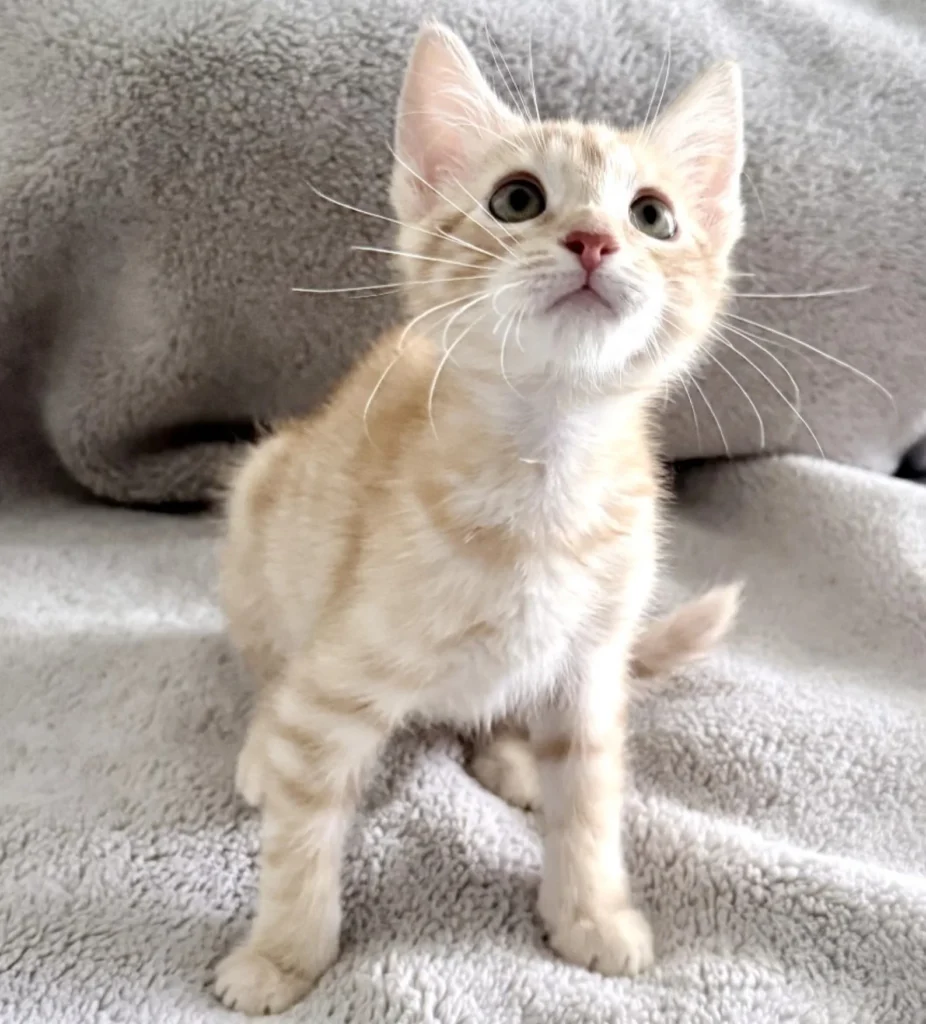
Kittens naturally chase, grab, pounce, and bite during play.
The target matters.
If hands and feet regularly become the toy, a kitten may continue grabbing people when excited. Wand toys, soft balls, and appropriate kicker toys give the kitten something else to chase and grab.
In a foster home, we want to see how the kitten uses those outlets.
Does the kitten chase a toy across the room? Do they grab and kick it? Can they pause after a play session and settle?
These observations help the foster understand the kitten’s normal play behavior and give us useful details before adoption.
Toys also make it easier to redirect an excited kitten without turning play into repeated handling or correction.
Play Can Show Us When a Kitten Is Becoming More Comfortable
A kitten’s willingness to play can change as they settle into foster care.
A newly arrived kitten may stay hidden and ignore toys during the first day. Later, they may watch a toy from across the room. Eventually, they may begin chasing it while the foster is nearby.
That progression gives us information.
The kitten is choosing to leave the hiding place, move through the room, and interact while a person is present.
Fosters often notice these small changes because they see the kitten every day. They can tell us whether play is increasing, whether the kitten is becoming more comfortable in the room, and how close a person can be before the kitten stops engaging.
Play is one observation among many, but it can help us track how a kitten is adjusting.
Foster Homes Help Us See a Kitten’s Play Style
A short interaction at an event or appointment does not always show a kitten’s normal energy level.
A foster home gives us more time.
One kitten may chase a wand toy for 15 minutes and immediately look for another game. Another may play for a few minutes, then climb onto a bed and rest. Some kittens play confidently alone but become more active with a sibling nearby.
These differences matter when we prepare adoption information.
Instead of calling every kitten “playful,” a foster can tell us that a kitten prefers interactive wand play, carries small toys around the room, or needs several minutes to warm up before joining a game.
Those details help potential adopters picture the kitten’s actual behavior in a home.
Play Helps Us Make Better Adoption Matches
A kitten’s play behavior can help us understand what type of home may fit them.
A highly active kitten may need adopters prepared for frequent play and normal kitten energy. A cautious kitten may do better with people willing to give them time before expecting immediate interaction.
Play can also show us how a kitten responds to other kittens.
A foster may notice that one kitten constantly seeks out a sibling for wrestling and chasing. Another may happily play alone and return to people for attention.
We use these observations alongside the kitten’s handling preferences, behavior, and care history when preparing them for adoption.
Play does not tell us everything about a kitten. It gives us practical information that is difficult to get from a photo or one brief meeting.
Play in a Foster Home Does Not Need to Be Complicated
Foster families do not need elaborate enrichment setups to help kittens play.
Depending on the kitten’s age and care needs, interaction may include:
- a wand toy moved across the floor
- small kitten-safe balls or toys to chase
- an appropriate kicker toy
- a tunnel or cardboard box used during supervised play
- short play sessions during normal daily care
We ask fosters to follow the care guidance for their placement and tell us what they observe.
For a shy kitten, the goal may simply be getting them comfortable enough to play while a person sits in the room. For a confident kitten, play may help the foster understand how much activity they need before settling.
The useful part is the observation that comes with the interaction.
Thinking About Fostering Rescue Kittens in South Florida?
If you can spend a little time playing with kittens during their normal daily care, you can help us learn how they behave in a home.
You do not need advanced behavior experience. We provide foster families with supplies, approved medical care, training, and ongoing help. We also match placements based on the foster’s experience, availability, and home setup.
A bathroom, spare room, or appropriate enclosed setup may be enough space for some kitten placements.
If you are interested in caring for kittens temporarily and helping us learn more about their personalities before adoption, you can learn how our foster program works.