
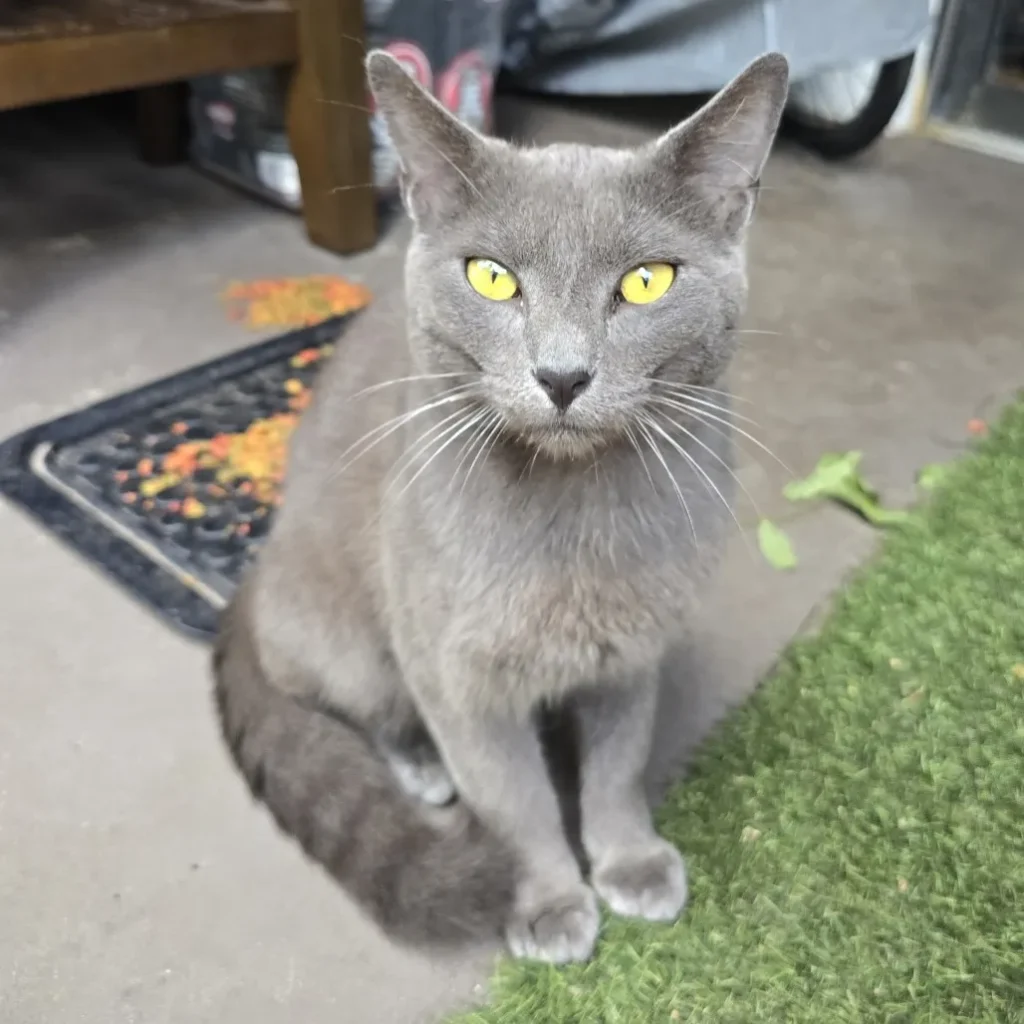
Your foster cat has been hiding for two days. The litter box is not where you originally planned to keep it. You have already sent us three questions.
Does that mean the placement is going badly?
No.
A foster placement doesn’t have to be perfect. We need the cat to be safe, receive the care required for that placement, and have a foster who tells us when something changes.
The first few days may involve adjustments for you and the cat. Here is how to tell the difference between a normal imperfect start and a situation that needs our attention.
Key Takeaways: Does a Foster Placement Need to Be Perfect?
- A cat hiding or acting cautiously during the first few days does not automatically mean the placement is failing.
- Foster routines sometimes need adjustments after the cat arrives.
- We need clear updates about changes in appetite, litter box habits, energy, or behavior.
- Asking several questions during your first placement is normal.
- A placement that needs our help or a change in care instructions can still be an appropriate foster placement.
- The goal is to care for the specific cat in your home, not create a flawless foster experience.
A Successful Foster Placement May Look Uneventful
People sometimes imagine a successful foster placement as a visible transformation.
A scared cat begins cuddling. A shy kitten becomes outgoing. The foster takes beautiful photos, and the cat quickly finds an adoptive home.
Sometimes that happens.
Other placements are much quieter.
An adult cat may spend several days hiding behind a carrier but continue eating overnight and using the litter box. A kitten may need regular weight checks while we monitor growth. A foster may simply give medication as instructed and send us updates until the cat finishes treatment.
Our guide to fostering cats in Broward County explains more about the role foster homes play in our rescue.
A foster placement can be working even when there is no dramatic progress to show.
The First Few Days May Require Changes
We can prepare for a placement, but we do not see exactly how every cat will respond to a new room until they arrive.
You may discover that the litter box is too close to a noisy doorway. A nervous cat may need the carrier left open as a hiding place. A kitten’s feeding routine may need to be adjusted based on the care instructions we give you.
These changes do not mean you prepared incorrectly.
Tell us what you are seeing before making larger changes to the cat’s care. We may ask you to move something, monitor a behavior for another day, send a photo or video, or follow a different instruction.
Foster care involves observing the cat in front of you. Sometimes the original setup needs to change once we have information from the home.

Hiding Does Not Automatically Mean the Placement Is Failing
A cat who hides after arriving may be responding to an unfamiliar environment.
We look at the rest of the picture.
Is the cat eating? Are they drinking? Have they used the litter box? Are they remaining in one hiding place or moving around when the room is quiet?
For example, a foster may tell us that a cat has stayed behind a carrier for two days. If the food bowl is empty each morning and the litter box is being used, that gives us different information than a cat who is hiding and has stopped eating.
You do not need to decide whether the behavior is normal on your own.
Tell us what you can observe. Specific details help us decide whether the cat needs more time, a setup change, or another step.
Asking Questions Does Not Mean You’re Doing a Bad Job
First-time fosters often notice things they have never needed to think about with their own pets.
How much did the kitten actually eat? Is that amount of litter box use normal? Should the cat still be hiding? Does this medication need to be given with food?
Ask us.
We would rather explain an instruction again than have a foster guess because they are worried about sounding inexperienced.
If you contact us about a change, include the details you know. For example:
“Luna ate breakfast normally but only had a few bites tonight. She used the litter box this afternoon and is awake, but she didn’t play like she normally does.”
That gives us something specific to work with.
Some Placements Need More Help Than Expected
A cat’s needs can change during foster care.
A kitten may develop diarrhea. An adult cat may stop eating. A medication schedule may become difficult because the cat is harder to handle than expected.
Contact us early.
Depending on the situation, we may ask for more information, adjust the care instructions, coordinate approved veterinary care, arrange transportation, or discuss whether another foster setup is needed.
Do not wait several days because you think asking for help means you failed.
A placement needing more coordination does not automatically mean the foster home is wrong. We need current information so we can decide what the cat needs next.
What Actually Tells Us a Foster Placement Is Working?
We look at whether the cat’s needs are being met and whether we know what is happening in the foster home.
That usually means:
- the cat is safely indoors in the agreed foster space
- feeding and medication instructions are being followed
- the litter box and living area are being maintained
- changes in appetite, energy, stool, or behavior are reported
- the foster responds when we need information or need to coordinate care
The cat does not need to become affectionate.
Your foster room does not need to look perfect.
You do not need to solve every problem before contacting us.
We need reliable daily care and accurate information about the cat.
Thinking About Fostering in South Florida?
If you are worried that your first foster placement will not go smoothly, expect to have questions.
At Happy Whiskers Animal Coalition, we provide supplies, approved veterinary care, care instructions, and ongoing support. We also need foster families to tell us when a routine is not working or a cat’s condition changes.
If you live in Broward County or a nearby South Florida community, you can learn how our foster program works and tell us about your home, schedule, and previous cat experience.