
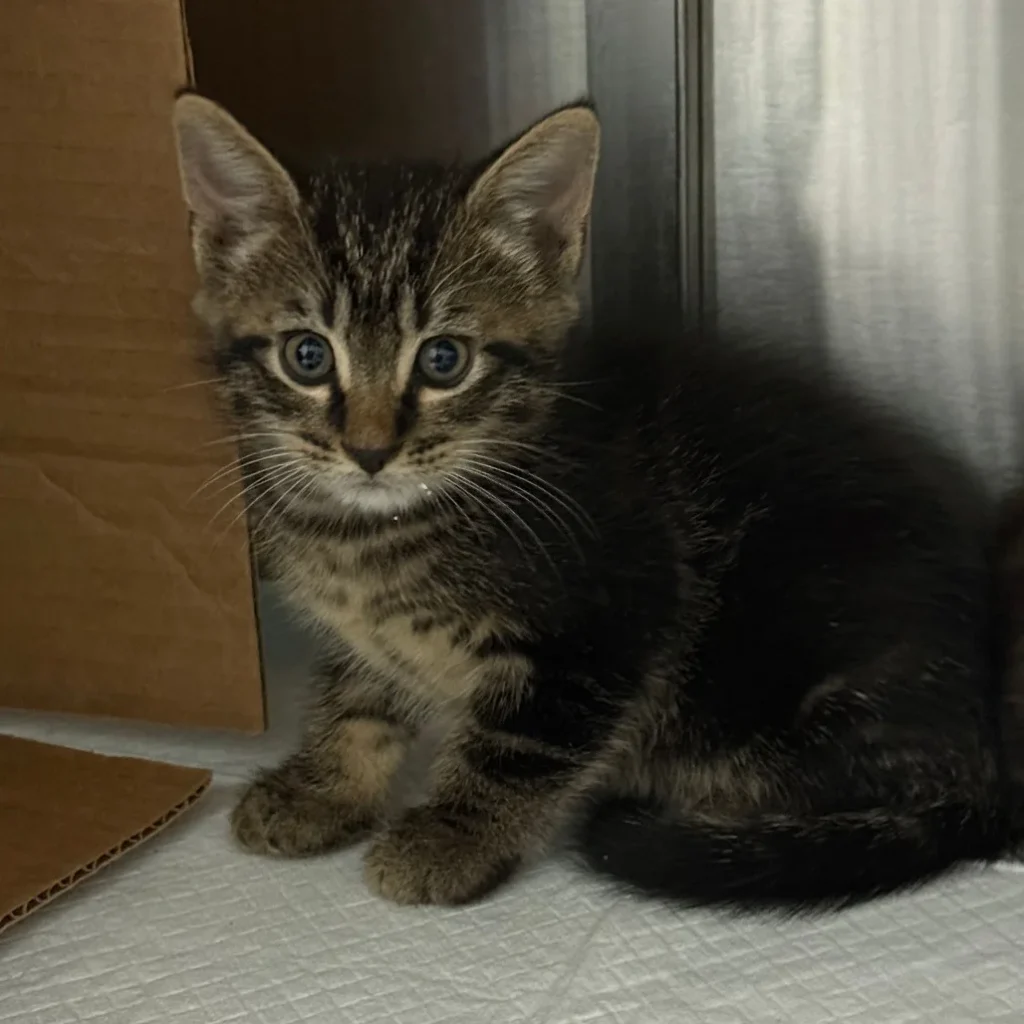
Kittens enter rescue care with very different experiences.
Some approach people immediately. Others hide, hiss, freeze, or pull away from touch because they were born outdoors or have had little contact with people.
Early kitten socialization gives those kittens repeated, safe experiences with caregivers, handling, play, feeding routines, and ordinary home activity. In foster care, this work happens through small interactions throughout the day rather than formal training sessions.
Here is why early kitten socialization matters and what foster homes actually do to help.
Key Takeaways: What Should You Know About Early Kitten Socialization?
- Socialization helps kittens learn that people and normal home routines can be safe.
- A frightened kitten should not be forced into handling before they are ready.
- Meals, play, quiet company, and brief handling can all support progress.
- Foster observations help us understand each kitten’s behavior before adoption.
- Socialization does not make every kitten behave the same way.
- Clear instructions and regular communication help foster families work at an appropriate pace.
What Does Early Kitten Socialization Mean in Rescue?
Early kitten socialization means helping a kitten become more comfortable around people, handling, and normal home life.
It does not mean forcing a frightened kitten to accept affection.
A kitten found outdoors may initially run behind a carrier whenever someone enters the room. A foster may begin by sitting nearby during meals or moving slowly through the space without trying to touch the kitten.
The first sign of progress may be small. The kitten may remain visible instead of hiding. Later, they may eat while the foster is present, approach a wand toy, or accept brief touch.
Socialization gives kittens repeated experiences that teach them what to expect from people.
The pace depends on the kitten’s age, background, health, and behavior. We want the kitten to make progress without becoming overwhelmed.
Our guide to fostering cats in Broward County explains how temporary homes fit into foster-based rescue locally.
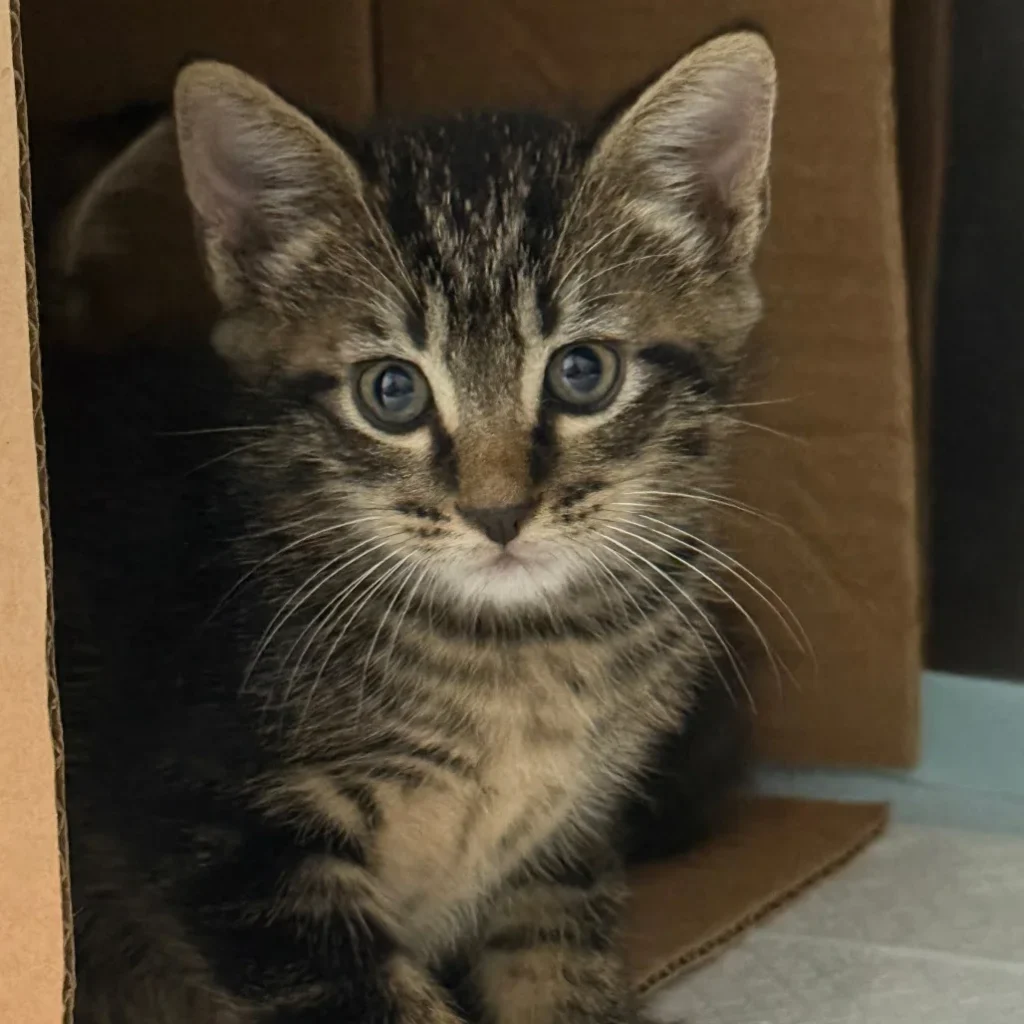
Why Do the Early Weeks Matter?
Young kittens are still learning which experiences are safe and which ones should make them cautious.
During this stage, calm contact with people can affect how they respond to handling, feeding, play, and household activity later.
That does not mean a kitten must be handled constantly.
A few short interactions may be more useful than one long session that leaves the kitten frightened. A foster might sit near the food bowl, speak quietly while cleaning the room, or offer a toy from a comfortable distance.
A nervous kitten may need several days before eating normally around someone. Another may begin approaching after only a few meals.
We judge progress by what the individual kitten does, not by expecting every kitten to follow the same timeline.
How Do Foster Homes Socialize Kittens?
Foster homes give kittens contact with the same caregivers and routines each day.
Meals arrive at predictable times. The litter box stays in a known location. The foster enters the room to clean, feed, observe, and play.
Those repeated routines reduce uncertainty.
A shy kitten may learn that the person entering the room brings food and does not chase them. Play with a wand toy can give the kitten a reason to move closer without requiring touch. Brief handling may begin once the kitten is calmer and can recover without remaining distressed.
Foster homes also introduce kittens to ordinary household sounds.
Doors open, water runs, people speak, and someone walks through the room. This exposure should happen gradually, with a safe hiding place available. We do not create loud or stressful situations simply to make a kitten “get used to them.”
A foster’s job is to observe how the kitten responds and tell us what changes.
What Does Socialization Progress Look Like?
Progress is often easier to see through specific behavior than broad labels such as “more confident.”
A kitten may:
- Stop hiding whenever the foster enters
- Eat while someone sits in the room
- Approach a toy held by a person
- Accept brief touch without retreating
- Recover more quickly after a household sound
- Begin seeking play or attention
- Tolerate being placed into a carrier with less distress
Not every kitten will reach each point at the same speed.
A kitten may enjoy play near people but still dislike being picked up. Another may accept handling but hide when unfamiliar visitors arrive.
Those differences are useful.
They help us understand what the kitten is comfortable with and what an adopter may need to continue after adoption.
How Does Socialization Help With Adoption?
Foster care gives us more information than a short meeting or adoption event can provide.
A foster may tell us that a kitten hides for a few minutes when someone new enters but comes out quickly for a toy. Another kitten may follow familiar people around the room but become distressed when separated from a littermate.
These details affect adoption conversations.
A cautious kitten may fit an adopter who understands that the first few days should be quiet. A kitten that constantly seeks another kitten for play and sleep may do better with a companion.
Socialization helps us describe the kitten based on observed behavior rather than guesses.
It also gives adopters a starting point. They can continue familiar routines involving meals, play, hiding spaces, and gradual handling after the kitten moves.
Socialization does not guarantee that a kitten will act completely comfortable in a new home. Moving still brings unfamiliar smells, people, and rooms.
Can Volunteers Help Without Fostering?
Most direct socialization happens in the foster home, but volunteers can remove other work from the foster’s schedule.
A volunteer may transport kittens to an approved veterinary appointment, deliver supplies, clean returned carriers, prepare adoption-event materials, or help organize photos and behavior notes.
That work matters because foster families still have jobs, families, resident pets, and appointments of their own.
If someone else handles a supply pickup or scheduled transport, the foster has more time to maintain the kittens’ feeding, cleaning, observation, and socialization routine.
Volunteer work should have a specific purpose. A transport needs a reliable driver at the scheduled time. Supplies need to reach the correct foster home. Photos and notes need to accurately reflect what the foster has observed.
Thinking About Fostering Kittens in South Florida?
You do not need to be a professional trainer to help socialize kittens.
We need foster families who can follow the placement instructions, provide daily care, and tell us what they observe.
That may include reporting that a kitten has begun eating around people, remains hidden most of the day, accepts brief touch, or becomes distressed when separated from another kitten.
We also consider your schedule and experience before placing kittens in your home.
Someone working full time may be able to care for weaned kittens that eat independently. That same schedule may not fit very young kittens requiring frequent feeding and closer monitoring.
If you are considering fostering in Broward County or a nearby South Florida community, you can learn how our foster program works and tell us about your home, resident pets, and availability.