
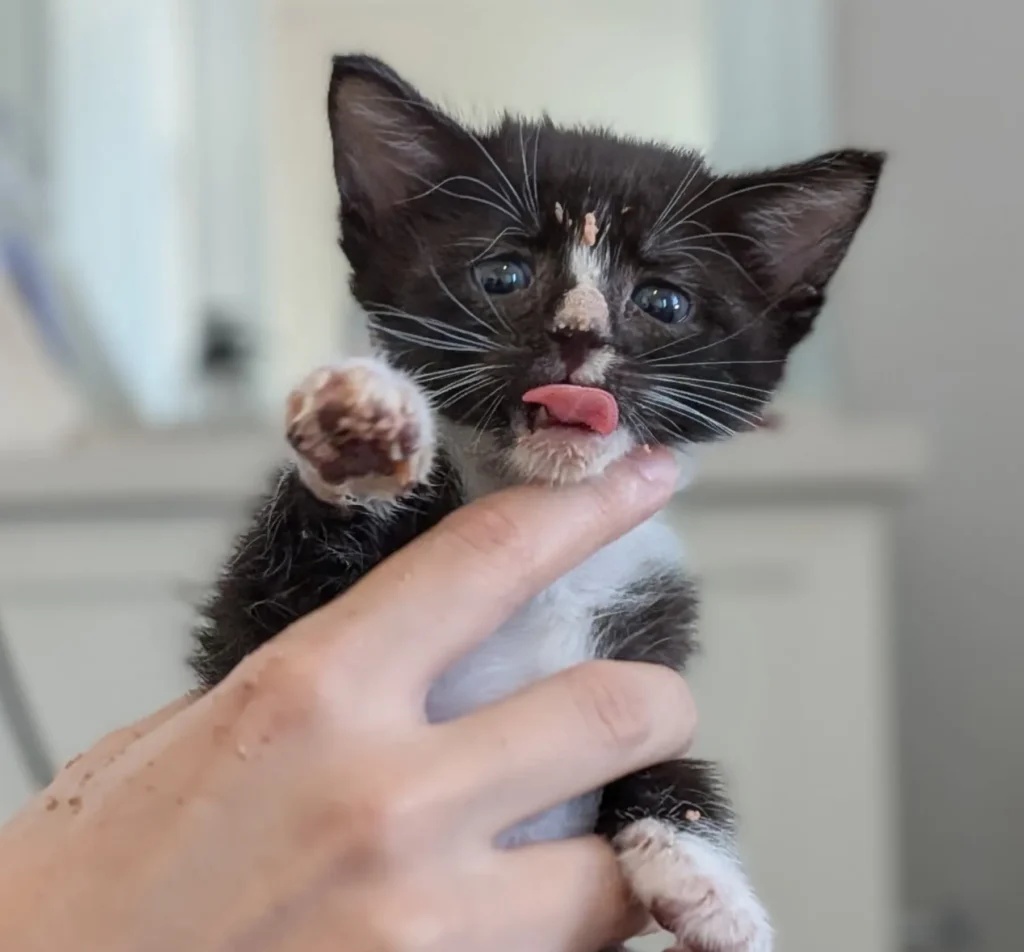
A playful kitten may look ready to go home, but adoption readiness involves more than age or personality.
Before we place a kitten for adoption, we need to understand how they are eating, whether they are gaining weight, how they use the litter box, and whether any medical concerns still need close monitoring. We also pay attention to how the kitten behaves in a home and what type of adopter may fit them.
This is one reason kittens sometimes remain in foster care even when they look healthy and active.
Here is what we look at when deciding when rescue kittens are ready for adoption.
Key Takeaways: When Are Rescue Kittens Ready for Adoption?
- Rescue kittens need to be healthy and developed enough to manage normal daily care in an adoptive home.
- Kittens who are bottle feeding, struggling to gain weight, or recovering from illness may need more time in foster care.
- Foster families track eating, litter box use, energy, weight, and behavior.
- A shy kitten can still be ready for adoption when we understand their needs and can explain them to potential adopters.
- Adoption timing depends on the individual kitten rather than age alone.
Kittens Need to Be Developed Enough for an Adoptive Home
Age gives us a general idea of a kitten’s stage of development, but we also look at what the kitten can do independently.
A kitten who still needs bottle feedings every few hours is not ready for a typical adoptive home. The same may be true for a small kitten who needs daily weight checks or extra help eating.
Kittens from the same litter do not always progress at exactly the same pace. One may begin eating well and gaining weight steadily while a littermate needs extra monitoring.
We use those day-to-day differences when deciding when each kitten is ready. We do not assume that every kitten reaches the same stage on the same date.
If you are considering adopting locally, our guide to adopting a cat in South Florida explains more about choosing and preparing for a rescue cat or kitten.
Medical Concerns Need to Be Treated or Clearly Understood
Rescue kittens may arrive with fleas, intestinal parasites, eye irritation, respiratory symptoms, or low weight. Some need medication or additional veterinary monitoring before adoption.
We pay close attention to changes in appetite, weight, breathing, stool, and energy. A kitten who stops eating, continues losing weight, or needs frequent medical monitoring may need to remain in foster care.
Age-appropriate veterinary care may include exams, vaccines, deworming, flea prevention, and other treatment based on the kitten’s needs.
A kitten does not need to have a completely uneventful medical history to be adopted. We do need to understand the kitten’s current condition and explain any ongoing care clearly to the adopter.
Eating and Litter Box Habits Tell Us a Lot
Eating independently is one of the clearest signs that a young kitten is moving out of the high-care stage.
Foster families may track a kitten’s meals and weight while the kitten transitions away from bottle or assisted feeding. We want to see that the kitten can eat age-appropriate food and maintain progress without round-the-clock feeding.
We also watch litter box habits. An occasional accident does not automatically delay adoption, but repeated accidents, diarrhea, or sudden changes may tell us that the kitten needs closer observation.
These daily routines help us separate a kitten who is ready for normal home care from one who still needs more hands-on monitoring.
We Need to Understand How the Kitten Behaves Around People
Adoption-ready does not mean outgoing.
Some kittens run toward every person who enters the room. Others take longer to approach, prefer quiet interaction, or hide when they hear unfamiliar voices.
Foster homes give us time to see those differences.
A shy kitten may still be ready for adoption if they are eating well, medically stable, and showing a pattern we understand. The foster may tell us that the kitten plays with a wand toy in the evening, accepts petting during meals, or needs a quiet room before approaching new people.
That information helps us describe the kitten accurately. Instead of telling an adopter that a kitten is simply “shy,” we can explain what the foster has observed and what the kitten may need during the first days at home.
A Ready Kitten Still Needs a Suitable Home
A kitten can be medically ready for adoption and still be a poor fit for a particular household.
We consider the kitten’s energy, behavior, care needs, and experience with other animals when reviewing a potential match. A very active kitten may need more daily play and interaction than an adopter expects. A reserved kitten may struggle in a busy home where they have little space to retreat.
Resident pets and the adopter’s normal schedule matter too.
The goal is to avoid obvious mismatches before the kitten goes home. When we know how a kitten behaves in foster care, we can have a more specific conversation with adopters about what daily life with that kitten may look like.
Foster Families Give Us the Details We Use to Decide
Many adoption-readiness decisions depend on what happens between vet appointments and adoption events.
Foster families see whether a kitten finishes meals, gains weight, uses the litter box, plays normally, accepts handling, or suddenly changes behavior. They can tell us if a kitten hides during the day but becomes active in the evening or if the kitten is comfortable around another cat.
We use those updates when deciding whether a kitten needs more foster time and when speaking with potential adopters.
A few weeks in foster care can give us a much clearer picture than a short intake exam or a few hours at an adoption event. We know more about what the kitten eats, how they behave in a home, and what may help them adjust after adoption.
Thinking About Adopting a Rescue Kitten?
If a kitten is not available immediately, there may be a practical reason for the wait. They may still be gaining weight, finishing treatment, learning to eat independently, or giving us time to better understand their behavior.
We would rather have clearer information before a kitten goes home than rush the placement and leave the adopter guessing about care needs or behavior.
Happy Whiskers Animal Coalition works with foster homes across South Florida and Broward County to care for cats and kittens before adoption. You can learn more about adopting through Happy Whiskers and see cats and kittens looking for homes.