
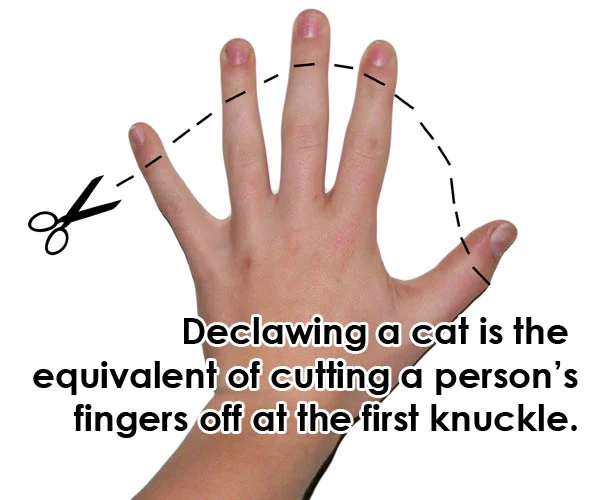
Many people think declawing is a simple fix to stop scratching behavior. But in reality, it’s a serious surgical procedure that can cause lasting harm to your cat that is illegal in many places for many reasons. It is inhumane and CRUEL to declaw. It’s important to understand what the surgery entails, how it affects your cat long-term, and what humane alternatives are available.
What Is Declawing?
Declawing is not just trimming the nails. It involves amputating the last bone of each toe, which is equivalent to cutting off a human finger at the last knuckle. The surgery is painful and can lead to complications such as infection, lameness, and behavioral changes. Many declawed cats suffer from chronic pain and arthritis later in life as they use their toes for balance.
Long-Term Consequences:
Cats use their claws for stretching, balance, climbing, defense, and communication. Without claws, a cat may feel insecure and defenseless. This can lead to increased aggression or withdrawal. Litter box avoidance is also common, as post-surgical pain makes scratching in litter uncomfortable.
Better Alternatives:
- Regular nail trims (we can teach you how! Or help provide resources for groomers)
- Scratching posts and pads
- Double-sided tape or furniture protectors
- Soft nail caps like Soft Paws
Behavioral training and enrichment can also reduce scratching. Provide a variety of textures and locations for scratching posts to encourage use.
Closing Thought:
Declawing may seem like a simple solution, but it causes pain and behavioral issues that can last a lifetime. Protect your furniture the kind way—keep your cat’s claws intact.