
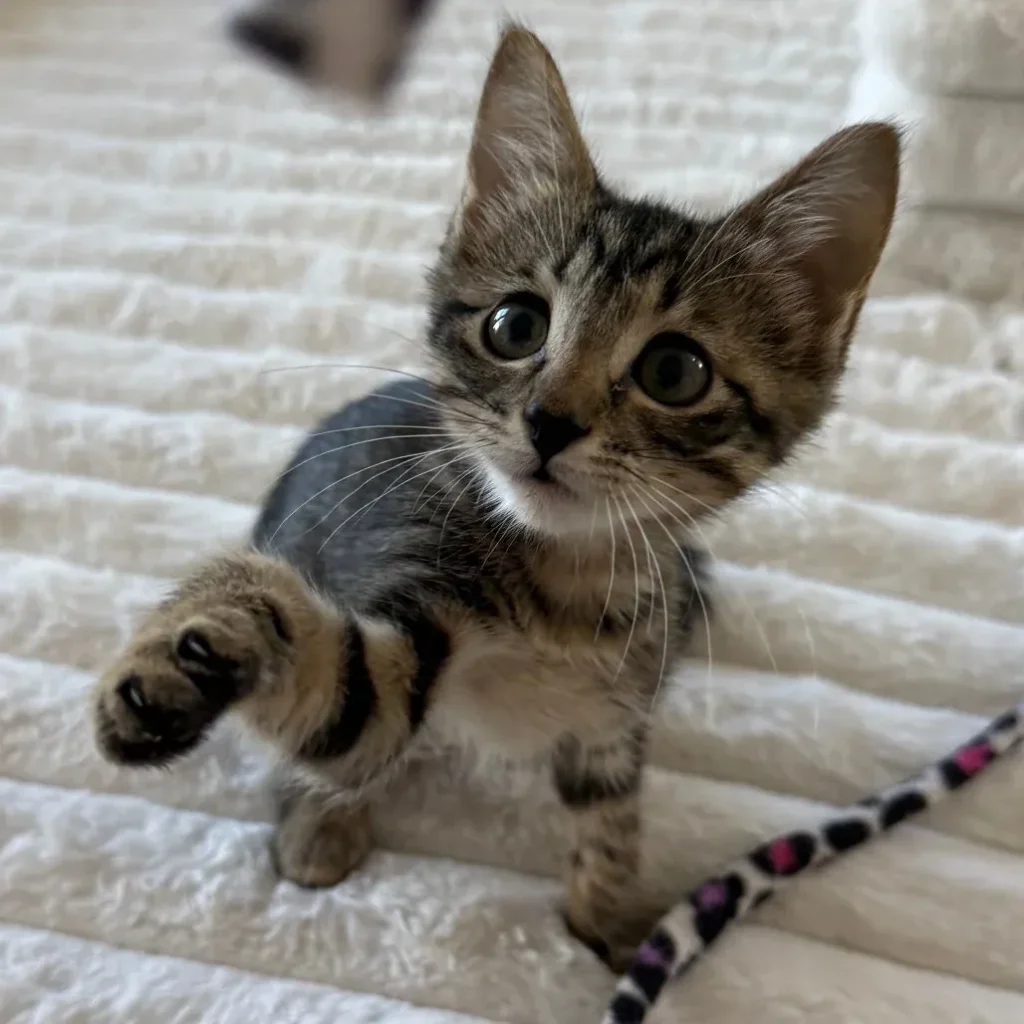
Choosing a rescue cat can feel harder when you are determined to make the “right” choice.
You may like one cat’s photo but worry about their age. A shy cat may interest you, but you are unsure how they will behave at home. You may meet a friendly cat and wonder if that first interaction is enough to know they are the one.
The goal is not to identify a cat with no quirks, care needs, or adjustment period. You are trying to understand what a cat is like and whether your household can meet their known needs.
A good rescue cat match is based on fit, not finding a perfect cat on the first try.
Key Takeaways: How Should You Choose a Rescue Cat?
- Look at the cat’s daily behavior and care needs, not only their photo or first interaction with you.
- A cat’s behavior during one meeting may differ from what their foster family sees at home.
- Age, shyness, or a specific care need does not automatically make a cat a poor match.
- Foster observations can tell you how a cat eats, plays, seeks attention, and responds to ordinary household activity.
- Ask whether you can meet the needs of the individual cat rather than searching for a cat with no challenges.
The “Perfect Cat” Checklist Can Work Against You
Many adopters arrive with an ideal cat in mind: friendly immediately, affectionate but independent, playful but calm, and comfortable with everyone.
Very few cats can be accurately described that way in every situation.
A cat who hides during a meet-and-greet may seek attention every evening in their foster home. A kitten who seems calm during a short visit may become much more active once comfortable. Even a confident cat can act differently after moving into a home with unfamiliar sounds, people, and routines.
If you are considering adopting a cat in South Florida, it helps to understand the individual cat rather than judge the match against an ideal personality checklist.
The useful question is not whether a cat has any challenges. It is whether the challenges we already know about are ones your household can handle.
Look at Your Actual Household
A cat has to live in your real home, not the home you imagine when looking through adoption photos.
Think about what a normal Tuesday looks like.
Is the home empty for most of the workday? Are young children running through the house? Do you already have cats or dogs? Is your home generally quiet? How much time do you realistically spend playing with a pet?
Those details help narrow the match.
A calm adult cat may fit well in a quiet home. A cat who becomes stressed around loud activity may struggle in a busy household. A young, active cat may need more play and supervision than someone working long hours expected.
This is also why appearance should not make the decision by itself. The cat whose photo first caught your attention may still be a good fit, but their routine and behavior matter once the adoption becomes daily life.

One Meeting Does Not Show Us Everything Either
We do not expect adopters to understand a cat’s entire personality during one visit.
Foster homes give us a different view.
A foster may know that a cat sleeps beside people but hides when visitors arrive. They may tell us the cat enjoys other cats, dislikes being picked up, or becomes playful every night after dinner. We may know that a shy cat needed several days to leave their hiding spot when they first entered foster care.
Those observations are useful because they come from ordinary daily routines.
When you meet a cat, ask how they behave in their foster home. Ask what surprised the foster about them. Ask what the cat does when the home is quiet and what happens when unfamiliar people arrive.
The answers may tell you more about daily life with that cat than whether they approached you during the first five minutes.
Some “Imperfections” Are Really Matching Information
A shy cat is giving you information about the type of introduction they may need.
An adult cat’s age tells you something about their current life stage. A bonded pair tells you they need a home together. A cat who needs medication has a care task that needs to fit someone’s routine.
These details should be taken seriously, but they do not automatically rule a cat out.
For example, an adopter who wants a quiet companion may be much happier with an adult cat who spends afternoons sleeping near a window than a kitten climbing furniture at midnight. Someone with a calm home and patience may be comfortable giving a shy cat time to settle.
Another household may know immediately that daily medication or a slow introduction to existing pets is more than they can take on.
Being clear about that helps us match cats responsibly. We would rather know what an adopter can and cannot handle than place a cat based on what sounds ideal.
Ask What the Cat Will Need From You
Instead of asking, “Is this the perfect cat?” ask what living with that specific cat is likely to require.
You might ask:
- How did this cat behave when they first entered foster care?
- How do they normally ask for attention?
- What is their energy level during a typical day?
- How do they respond to visitors or household noise?
- Have they lived with other cats or dogs?
- Are there care routines an adopter needs to continue?
Then compare those answers with your household.
If a cat needs a quiet room and several days to settle, can you provide that space? If they need active play every day, does that fit your schedule? If introductions to another pet need to move slowly, can your household keep the animals separated while that happens?
This gives you something practical to evaluate. “Perfect” does not.
Choosing a Rescue Cat Should Be a Conversation
When we know how a cat behaves in foster care, we can share those observations with potential adopters.
We also need honest information about the adopter’s home.
If you work long hours, have other pets, live with young children, or know you are uncomfortable giving medication, say so. Those details help us discuss cats whose routines and needs may fit better.
The goal is not to convince you to choose a particular cat. We want the information we have about the cat to match the home you are describing.
If you are ready to see who is currently looking for a home, you can learn more about adopting through Happy Whiskers.