
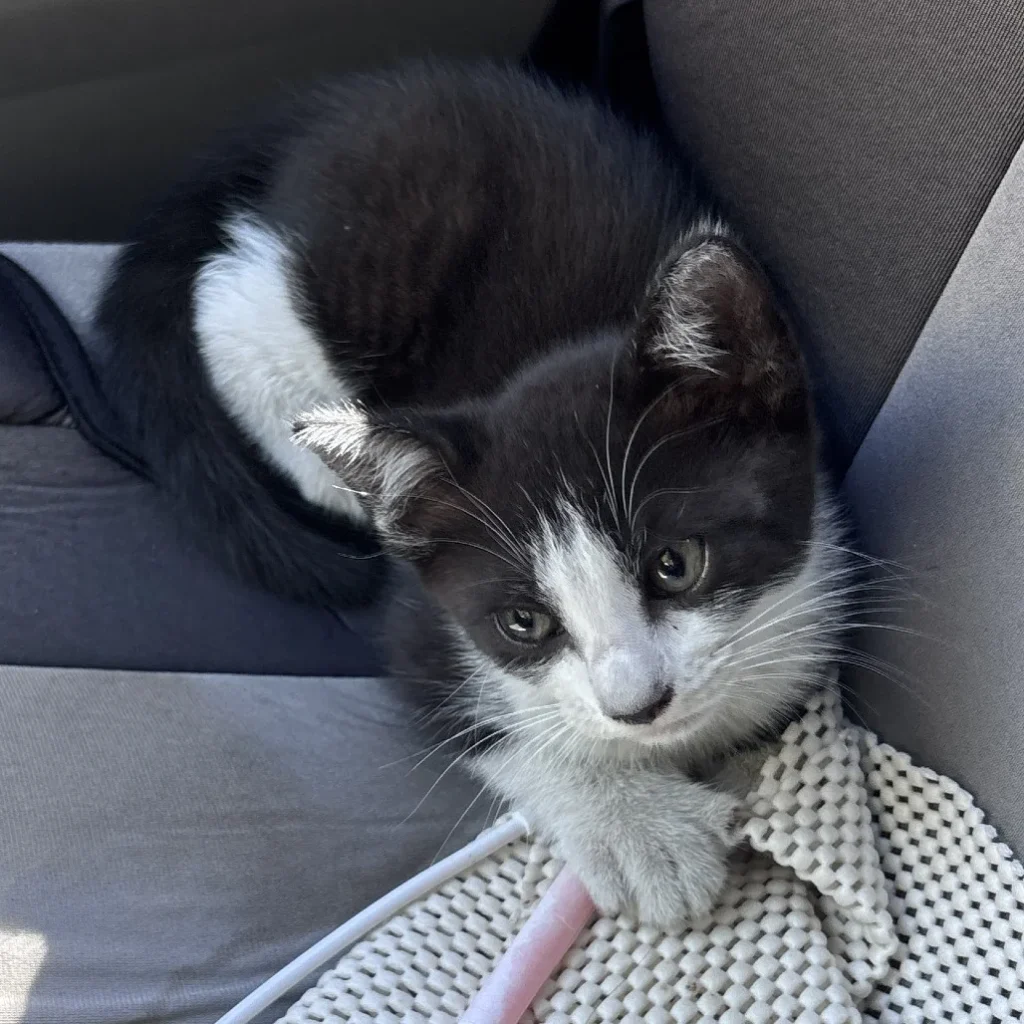
A rescue cat may eat the food you provide, use the litter box, and sleep comfortably in your home but still move away when you reach toward them.
That can be confusing. The cat appears to be settling in, so why don’t they trust you yet?
Building trust with a rescue cat means the cat is learning what to expect from you specifically. They are learning how you approach, whether you respect their space, and what happens when they choose to come closer.
That information builds through repeated interactions. One good afternoon may help, but the cat is still learning your patterns.
Key Takeaways: What Should You Expect When Building Trust With a Rescue Cat?
- A cat can feel comfortable in the home before they fully trust close interaction with a person.
- Trust often appears first in small choices, such as eating nearby or remaining in the room when you move.
- How you respond when a cat backs away can affect future interactions.
- Repeated, predictable contact gives the cat information about what to expect from you.
- Foster observations may help explain how the individual cat has built trust with people before.
- Trust should be measured by changes in the cat’s choices, not how quickly they accept petting.
Feeling Safe in the Home and Trusting You Are Different
A cat may quickly learn where the food and litter box are. They may explore at night and sleep in the open when the house is quiet.
Then you walk toward them and they retreat.
The home itself has become familiar, but close interaction with you still feels uncertain.
If you are preparing to adopt a cat in South Florida, this distinction can help you understand why a cat’s progress may seem uneven.
The cat is learning several things at once. They are learning the room, household routine, sounds, and people. Comfort with one part does not automatically mean comfort with every type of handling or contact.
Your Reactions Teach the Cat What to Expect From You
Imagine a cat is sitting several feet away and you reach toward them.
They move back.
What happens next gives the cat information.
If you continue reaching, follow them, or pick them up, the cat learns that moving away does not end the interaction. The next time you approach, they may retreat sooner.
If you stop and give them space, they learn something different.
The cat’s choice affected what happened next.
This is one reason trust can develop through very ordinary moments. You do not need to create a special bonding exercise every time you enter the room. The cat is already learning from how you respond to their body language.
Respecting a cat’s “not yet” can make it easier for them to choose “yes” later.
Trust Often Shows Up as Less Avoidance First
People tend to look for obvious affection.
A nervous cat may show trust much earlier than that.
You may notice the cat:
- stays in the room when you stand up
- eats while you sit nearby
- walks past you instead of taking a longer route
- rests with their body exposed rather than pressed into a hiding spot
- watches your hand without immediately retreating
- approaches and sniffs before moving away
These changes matter because the cat is choosing to remain closer to you.
A cat who previously disappeared every time you entered may still refuse petting, but staying visible is a change in how they evaluate your presence.
Trust may first look like the cat deciding they no longer need as much distance.
Repetition Matters More Than One Perfect Interaction
A cat does not learn your behavior from one quiet evening.
They watch what happens repeatedly.
Does food arrive without someone pulling them from a hiding place? When they walk away from petting, does the interaction stop? Can they sit nearby without being picked up?
The answers become part of what the cat expects from you.
This is also why several people in the same household may build trust with a cat at different speeds. One person may sit quietly and allow the cat to approach. Another may frequently reach down, pick the cat up, or move quickly toward them.
The cat can respond differently to each person because each person has created a different pattern of interaction.
Foster Observations Can Tell Us How a Cat Has Built Trust Before
Because our cats live in foster homes, we may already know something about how an individual cat approaches people.
A foster may tell us that a cat watched from across the room for several days before approaching during meals. Another cat may immediately seek petting but panic when someone tries to pick them up.
Those details give us a useful starting point after adoption.
If a cat previously built trust through play, a wand toy may be a familiar way to interact without close handling. If the foster tells us the cat approaches people during feeding but rarely seeks attention at other times, we can explain that pattern to the adopter.
The goal is not to recreate the foster home exactly.
We use what the foster observed to understand how the individual cat has responded to people before.
Pushing Contact Can Change the Cat’s Next Decision
Sometimes an interaction appears successful because the cat tolerated it.
A person picks up the cat. The cat remains still. They assume the cat enjoyed being held.
Then the cat hides the next time that person enters.
Look at what the cat does after an interaction.
Do they remain nearby? Approach again? Relax? Or do they create more distance?
A cat freezing during handling is not the same as a cat choosing contact.
If you are unsure, allow the cat to leave. A cat who wants more interaction has the opportunity to return.
That choice gives you clearer information than holding the cat in place and trying to decide whether they are comfortable.
Trust Can Grow Without Turning a Cat Into a Different Cat
Building trust does not guarantee that every rescue cat will become a lap cat.
A cat may trust you deeply and still dislike being picked up. They may follow you through the house but sleep alone. They may ask for petting for two minutes and then walk away.
Foster families often help us identify these preferences before adoption.
Trust means the cat understands your interactions well enough to make choices around you. It does not require the cat to behave like a different animal.
Knowing this can prevent an adopter from repeatedly pushing for a type of affection the cat has never enjoyed.
Thinking About Adopting a Rescue Cat in South Florida?
Before adopting, ask how the cat interacts with their foster family.
Do they approach people or wait for someone to sit down? Do they enjoy petting? How do they respond to being picked up? What usually causes them to move away?
Those observations can give you a better idea of how the individual cat communicates trust.
When you are ready, you can see cats currently looking for homes through Happy Whiskers and ask us about the cats you are considering.